
Discover the best Japanese knives for your kitchen with our carefully selected top 5 picks. From razor-sharp chef’s knives to versatile santoku blades and specialized vegetable knives, these options offer excellent cutting performance, durability, and precision. Whether you’re a professional chef or a home cook, choosing the right Japanese knife can transform your food preparation experience.
Top 5 Best Japanese Knives at a Glance
Detailed Reviews of the 5 Best Japanese Knives
1. Global 8-Inch Chef’s Knife

The Global 8-Inch Chef’s Knife is an excellent choice for cooks who want the shape and versatility of a traditional chef’s knife with the lightweight precision of Japanese knife craftsmanship. Its thinner, sharper blade makes it suitable for slicing, dicing, chopping, and mincing a wide variety of ingredients.
Manufactured in Japan using a specialized stainless steel formulation, this knife is designed to retain its sharp edge for extended periods. The blade’s geometry supports clean, precise cuts, making everyday kitchen preparation more efficient and enjoyable.
One of its most distinctive features is the seamless stainless steel construction. The handle and blade form a continuous piece, eliminating grooves that could collect debris. Small dimples on the handle improve grip security, while the design allows comfortable pinch-grip handling. It is a compelling option for cooks seeking a modern, hygienic, and lightweight Japanese chef’s knife.
| Pros | Cons |
|---|---|
| Lightweight and easy to maneuver | May feel different from traditional handled knives |
| Sharp, thin cutting edge | Requires proper sharpening care |
| Seamless stainless steel construction | Premium pricing may not suit every budget |
Best For: Everyday cooking, precise slicing, and cooks who prefer lightweight knife handling.
2. Miyabi Kaizen 7-Inch Hollow Edge Santoku Knife

The Miyabi Kaizen 7-Inch Hollow Edge Santoku Knife combines sophisticated Japanese craftsmanship with excellent cutting versatility. Its santoku profile makes it particularly useful for chopping vegetables, slicing meat, and preparing fish. The knife’s balanced feel can help provide a comfortable and controlled cutting experience.
A standout feature is its beautiful Damascus blade pattern, created using 65 layers of steel surrounding a solid core. This layered construction gives the knife an attractive appearance while providing a refined blade finish. It is a stylish addition to any kitchen where aesthetics and cutting performance matter.
The hollow-edge indentations help reduce food sticking during slicing. This is especially helpful when cutting starchy potatoes, cucumbers, or sticky ingredients. For cooks looking for a high-quality Japanese santoku knife that can handle a wide range of kitchen tasks, the Miyabi Kaizen is a strong contender.
| Pros | Cons |
|---|---|
| Beautiful Damascus blade | Requires careful maintenance |
| Well-balanced santoku design | May be costly for beginners |
| Hollow edge helps release food | Seven-inch blade may be shorter than preferred |
Best For: Home cooks who want a versatile santoku knife with elegant Damascus styling.
3. Shun Classic Nakiri Knife
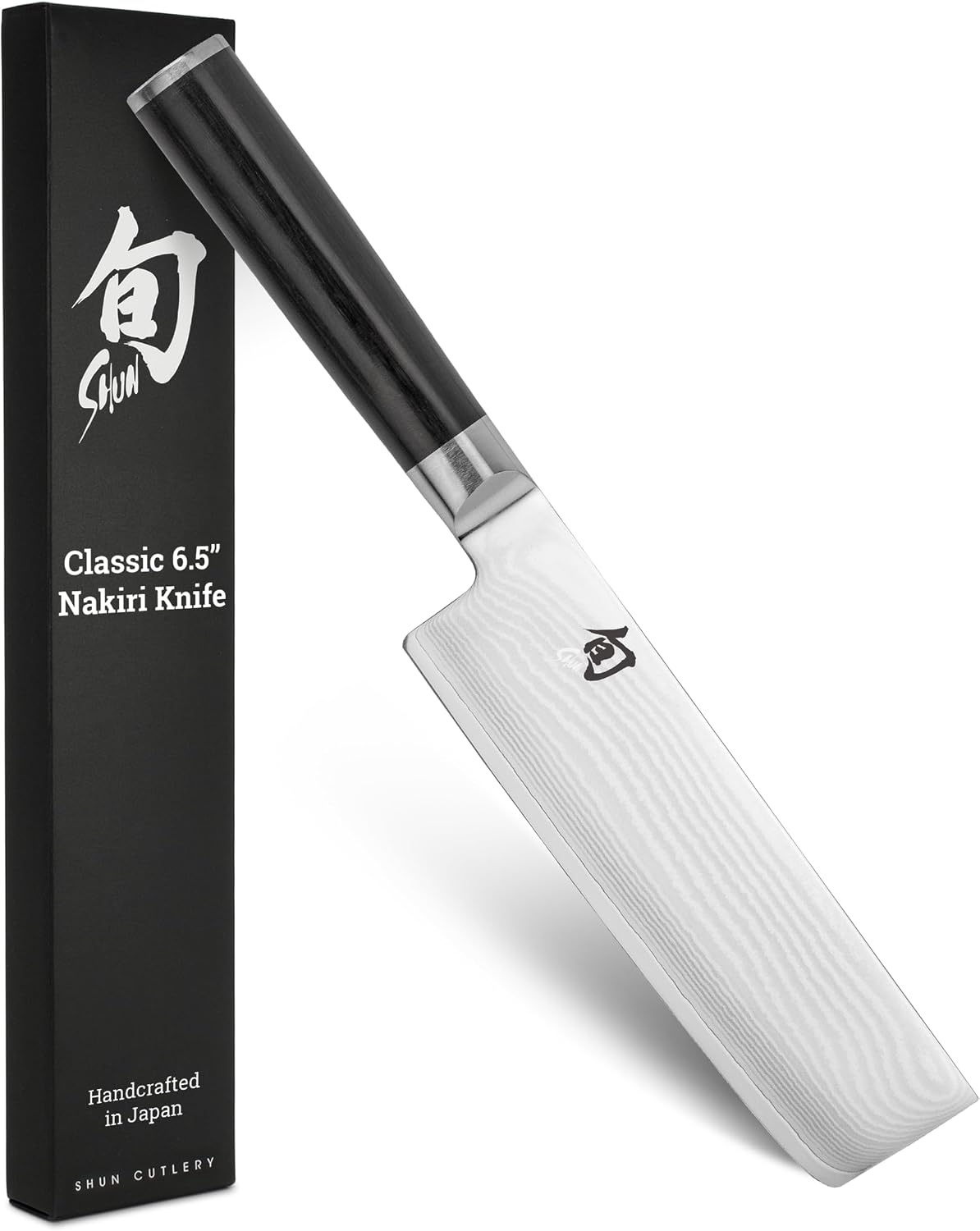
The Shun Classic Nakiri is a specialized Japanese vegetable knife designed to make vegetable preparation more precise and efficient. Its rectangular blade provides a broad cutting surface, making it ideal for chopping, slicing, and dicing vegetables with a straight-down motion.
Its striking Damascus finish features a wavy pattern that adds visual appeal while contributing to the blade’s layered construction. The blade’s refined geometry is intended to reduce friction, helping it glide through firm vegetables such as carrots, turnips, and potatoes.
Unlike a traditional curved chef’s knife, the nakiri is designed for a more direct chopping technique. This makes it particularly attractive to cooks who regularly prepare vegetables or want a dedicated knife for plant-based meals. Its combination of craftsmanship, sharpness, and specialized shape makes it a valuable kitchen tool.
| Pros | Cons |
|---|---|
| Excellent for vegetable preparation | Less versatile for certain meat tasks |
| Attractive Damascus finish | Requires proper edge care |
| Straight blade supports precise chopping | Specialized blade profile |
Best For: Vegetable lovers, meal preppers, and cooks who want a dedicated Japanese vegetable knife.
4. KYOKU Cleaver Knife (Shogun Series)

The KYOKU Shogun Series Cleaver is a midweight kitchen knife designed for cooks who need more cutting power than a standard chef’s knife can provide. Its cleaver-style blade is suitable for cutting meat, preparing vegetables, and handling demanding food preparation tasks.
The knife’s weight provides useful momentum when working with dense ingredients. It can help with tasks such as cutting chicken wings, trimming meat, or preparing fish. At the same time, its midweight construction is intended to remain manageable for routine kitchen use.
This cleaver can also be used for slicing meat and vegetables into strips for stir-frying. Its versatile shape and sturdy build make it a practical option for cooks who want a single knife capable of handling both heavy-duty and everyday food preparation. As with all cleavers, careful handling and proper cutting technique are important.
| Pros | Cons |
|---|---|
| Useful weight for demanding cutting tasks | Bulkier than a standard chef’s knife |
| Versatile for meat and vegetables | May require adjustment for beginners |
| Distinctive Shogun Series design | Not ideal for delicate slicing |
Best For: Cooks who need a versatile cleaver for meat, vegetables, and heavier kitchen tasks.
5. Wüsthof Classic 8-Inch Chef’s Knife

The Wüsthof Classic 8-Inch Chef’s Knife is a powerful Western-style kitchen knife that offers an alternative to lighter Japanese designs. Its curved stainless steel blade and substantial weight make it particularly suitable for rocking-chop techniques and a broad range of everyday cooking tasks.
The knife performs well when cutting produce and protein. Its subtly convex belly supports a rocking motion, while its cutting edge is designed to handle hardy vegetables such as carrots. It can also slice tomatoes and onions cleanly when properly maintained and sharpened.
The polymer handle features a matte texture designed to provide a secure grip and comes in multiple color options. However, at approximately 9.2 ounces, this knife is on the heavier side, and its relatively thick handle may require more effort to maneuver. It is best suited to cooks who appreciate a substantial, confidence-inspiring blade.
| Pros | Cons |
|---|---|
| Excellent for rocking-chop techniques | Heavier than many Japanese knives |
| Versatile for produce and protein | Thick handle may feel cumbersome |
| Secure, textured polymer handle | May be less comfortable for users who prefer lightweight knives |
Best For: Experienced cooks who prefer a sturdy Western-style chef’s knife with a rocking blade profile.
How to Choose the Best Japanese Knife
Choosing the best Japanese knife depends on your cooking style, preferred cutting technique, and the ingredients you prepare most often. Here are a few important factors to consider.
Blade Type
A chef’s knife is a versatile all-purpose option. A santoku knife is excellent for slicing, chopping, and dicing. A nakiri is specialized for vegetables, while a cleaver provides additional cutting power for demanding tasks.
Blade Material
Japanese knives often use high-quality stainless or carbon-based steel. Stainless steel is generally easier to maintain because it offers better resistance to corrosion. Damascus-style blades provide an attractive layered appearance, although the cutting performance depends on the underlying steel and blade geometry.
Weight and Balance
Lightweight knives can offer greater maneuverability and precision. Heavier knives may provide more momentum during chopping. The ideal weight depends on your comfort, grip, and cooking technique.
Maintenance
Keep your knife sharp, clean, and dry after use. Avoid cutting on hard surfaces such as glass or stone. Use a suitable cutting board and follow the manufacturer’s sharpening and maintenance recommendations to help extend the knife’s lifespan.
Final Verdict: Which Japanese Knife Is Best?
The best Japanese knife for your kitchen depends on your specific needs. The Global 8-Inch Chef’s Knife is an excellent all-around choice for lightweight precision. The Miyabi Kaizen Santoku stands out for its balanced performance and Damascus design. The Shun Classic Nakiri is ideal for vegetable preparation, while the KYOKU Shogun Cleaver is suitable for heavier cutting tasks. The Wüsthof Classic offers a substantial Western-style alternative for cooks who prefer a rocking motion.
If you’re looking for a versatile knife for everyday cooking, the Global 8-Inch Chef’s Knife is a compelling starting point. For specialized tasks, consider the santoku, nakiri, or cleaver according to your cooking preferences.
As an Amazon Associate, I earn from qualifying purchases. Product availability and prices may change over time.
Related Posts

Best Time Saving Air Fryer: Top 5 Air Fryers for Faster, Easier Cooking
Best Time Saving Air Fryer: Top 5 Air Fryers for…

The 5 Best Sewing Machines for Beginners and Experienced Sewists
Choosing the right sewing machine can make sewing projects faster,…

5 Best Alarm Clocks of 2026: Top Picks for Smart Wake-Ups, Sunrise Lighting, and Better Sleep
Finding the best alarm clock can make your mornings easier…