
Finding the right fitness tracker can make it easier to monitor workouts, activity, sleep, heart rate, recovery, and everyday movement. The best choice depends on how much information you want, how often you exercise, whether you need GPS, and whether you prefer a traditional smartwatch design or a minimalist wearable.
We compare five popular fitness trackers across different use cases: the Garmin Vivoactive 5 for balanced everyday tracking, Samsung Galaxy Fit3 for a slim and straightforward experience, Garmin Venu 3 for smartwatch-style features, Garmin Forerunner 265 for serious training, and Whoop 5.0 for screen-free personalized coaching and recovery insights.
Quick Comparison: Best Fitness Trackers
Our Top Fitness Tracker Picks at a Glance
| Fitness Tracker | Best For | GPS | Display | Key Strength |
|---|---|---|---|---|
| Garmin Vivoactive 5 | Everyday fitness | Yes | Color touchscreen | Balanced activity and health tracking |
| Samsung Galaxy Fit3 | Simple everyday tracking | Phone-assisted | AMOLED touchscreen | Lightweight design |
| Garmin Venu 3 | Fitness plus smartwatch features | Yes | AMOLED touchscreen | Fitness and lifestyle features |
| Garmin Forerunner 265 | Runners and athletes | Yes | AMOLED touchscreen | Advanced training metrics |
| Whoop 5.0 | Recovery and personalized coaching | No | Screenless | Detailed recovery and lifestyle insights |
1. Garmin Vivoactive 5

The Garmin Vivoactive 5 is designed for people who want broad fitness and wellness tracking without the complexity of a highly specialized sports watch. It offers a practical combination of activity tracking, steps, heart-rate monitoring, sleep insights, and workout support in a relatively compact smartwatch design.
Its smaller profile can make it comfortable for everyday wear, while the watch-style appearance works well beyond the gym. For users who want to monitor their daily movement and workouts while keeping the experience straightforward, the Vivoactive 5 offers a versatile approach.
The Vivoactive 5 is especially appealing if you want a fitness-focused wearable that does not feel overly bulky or specialized. It provides a useful balance between everyday smartwatch functionality and fitness tracking, making it suitable for walking, running, gym sessions, sleep tracking, and general activity monitoring.
| Pros | Cons |
|---|---|
| Comfortable everyday design | Less specialized than dedicated performance watches |
| Broad activity and health tracking | Smaller display than some larger smartwatches |
| Useful sleep and heart-rate monitoring | Advanced athletes may want more specialized metrics |
| Works well as an everyday fitness watch | Feature set may be more than casual users need |
2. Samsung Galaxy Fit3

The Samsung Galaxy Fit3 focuses on keeping fitness tracking simple and lightweight. Its slim design makes it an attractive option for people who want to wear a tracker throughout the day without the bulk associated with many full-size smartwatches.
The touchscreen provides enough room to view important activity information at a glance while keeping the overall device compact. It is designed around core tracking rather than an overwhelming collection of advanced sports features, which can make it approachable for everyday users.
For users who primarily want activity monitoring, workout tracking, and key fitness information in a lightweight wearable, the Galaxy Fit3 is worth considering. Its compact form can also make it convenient for people who prefer a fitness band rather than a traditional smartwatch.
| Pros | Cons |
|---|---|
| Slim and lightweight design | Less advanced than dedicated sports watches |
| Large-enough touchscreen for daily metrics | GPS functionality is more limited than GPS-equipped watches |
| Multiple activity and fitness tracking features | Not aimed at highly specialized training |
| Good fit for straightforward everyday tracking | Smartwatch functionality is more limited |
3. Garmin Venu 3

The Garmin Venu 3 combines fitness tracking with a more traditional smartwatch experience. Its design is suitable for workouts as well as everyday situations, making it an option for people who do not want a specialized-looking sports watch on their wrist all day.
Fitness tracking is one of the Venu 3’s major strengths. It can provide real-time workout information such as heart rate, distance, pace, and elevation, while its broader health and lifestyle tracking can help users understand activity and sleep patterns.
The Venu 3 also adds smartwatch-oriented conveniences, including notifications and other connected features. This combination makes it particularly interesting for someone who wants detailed fitness information without giving up the appearance and functionality of a modern smartwatch.
| Pros | Cons |
|---|---|
| Strong combination of fitness and smartwatch features | Higher price than basic fitness trackers |
| AMOLED display with a premium appearance | May be more feature-rich than casual users require |
| Detailed activity and health tracking | Less specialized than dedicated performance watches |
| Useful lifestyle and sleep features | Advanced sports users may prefer the Forerunner series |
4. Garmin Forerunner 265

The Garmin Forerunner 265 is built with athletes, runners, cyclists, and triathletes in mind. Rather than concentrating primarily on simple daily activity tracking, it provides a deeper collection of training information and performance-oriented tools for people who want to analyze workouts in greater detail.
The built-in GPS and combination of sensors allow the Forerunner 265 to monitor a wide range of workout data. Its training-oriented feature set can be particularly useful for runners and multisport athletes who want detailed information about pace, heart rate, distance, elevation, and other performance metrics.
The hybrid touchscreen and button controls are also useful during exercise. Physical buttons can be convenient during sweaty workouts, while the touchscreen provides a straightforward way to review information outside of active training. Its strong battery performance and athletic design further reinforce its focus on extended training use.
| Pros | Cons |
|---|---|
| Advanced training and performance metrics | Larger and more specialized than basic trackers |
| Built-in GPS and multisport support | Can be expensive for casual users |
| Useful physical controls for workouts | Sport-focused design may not suit everyone |
| Strong battery performance | Advanced features can require more time to learn |
| Specification | Detail |
|---|---|
| Measured Weight | 45.4 g | 1.6 oz |
| Measured Dimensions | 5.08 cm x 4.83 cm | 2.0″ x 1.9″ |
| Measured Heart Rate Accuracy | 96.55% |
| GPS Tracking | Yes |
| Supported Operating Systems | Apple iOS & Android OS |
5. Whoop 5.0
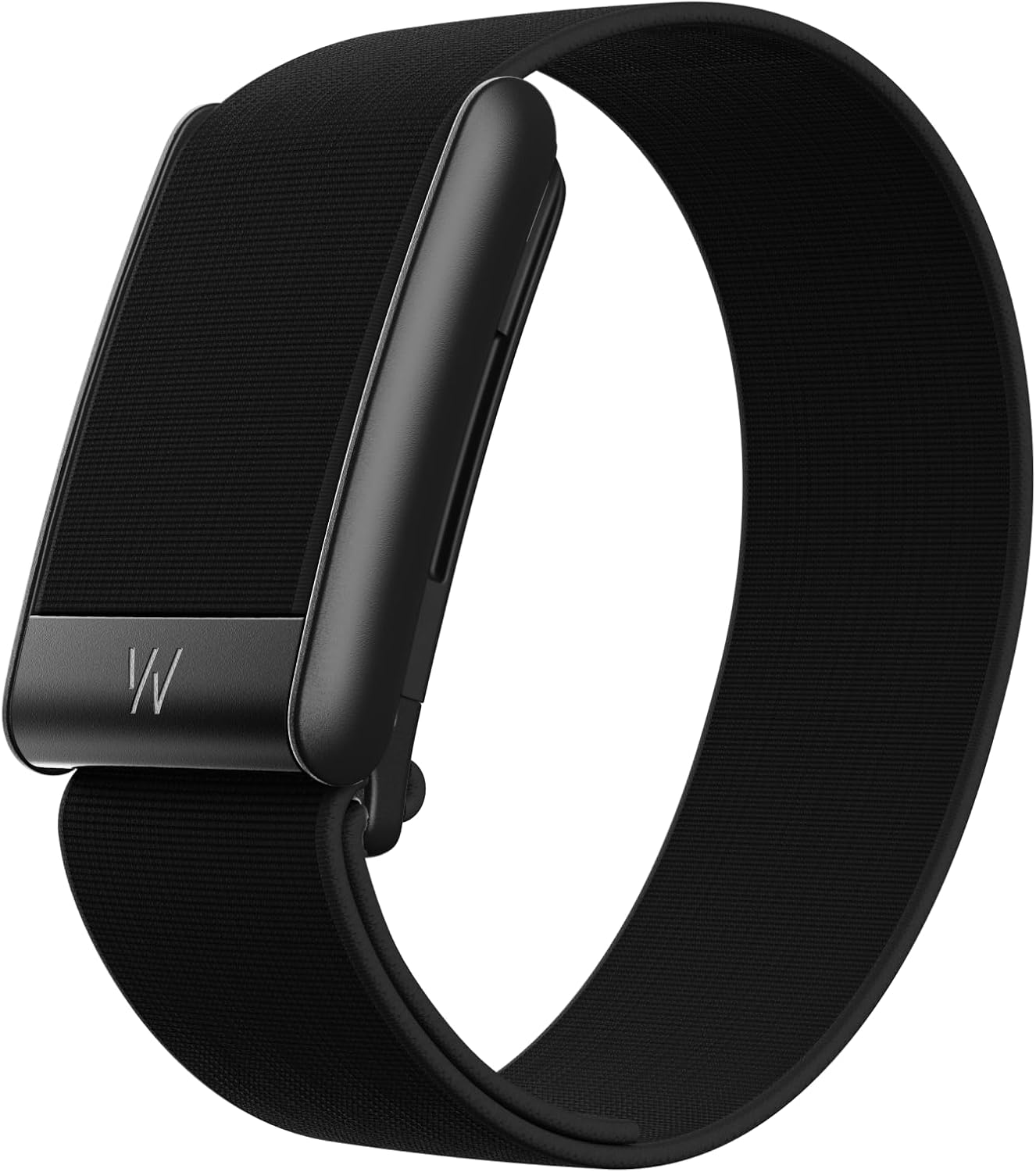
The Whoop 5.0 takes a different approach to fitness tracking by removing the traditional screen and focusing on continuous data collection, recovery information, and personalized recommendations. Its screenless design can be appealing to users who want wearable tracking without constantly checking a watch display.
Sleep, heart-rate, training readiness, and recovery-focused information are central to the Whoop experience. The device is designed to build a longer-term picture of daily habits and performance, giving users data-driven feedback intended to help them understand how activity, sleep, and recovery interact.
The lightweight design is also suited to continuous wear. Its battery system is designed to reduce interruptions to tracking, while the companion experience places substantial emphasis on coaching, trends, and personalized insights. The main consideration is that the Whoop approach is different from a conventional smartwatch because it prioritizes data and coaching over an on-device display and traditional smartwatch functions.
| Pros | Cons |
|---|---|
| Screenless and lightweight design | No built-in display |
| Detailed recovery and sleep insights | No built-in GPS |
| Personalized coaching and recommendations | Subscription-based experience can increase long-term cost |
| Designed for continuous wear | Not a traditional smartwatch replacement |
| Specification | Detail |
|---|---|
| Measured Weight | 28.3 g | 1.0 oz |
| Measured Dimensions | 2.54 cm x 3.56 cm | 1.0″ x 1.4″ |
| Measured Heart Rate Accuracy | 94.44% |
| GPS Tracking | No |
| Supported Operating Systems | Apple iOS & Android OS |
How to Choose the Best Fitness Tracker
Choosing a fitness tracker is easier when you first identify the features you will actually use. A simple tracker may be enough for daily steps, basic activity monitoring, and general wellness. Runners and athletes often benefit more from dedicated GPS, training metrics, physical controls, and deeper performance analysis.
Fitness Tracker FAQs
What is the best type of fitness tracker for beginners?
A beginner will generally benefit from a tracker that is comfortable, easy to operate, and provides the core metrics they care about, such as steps, heart rate, workouts, and sleep.
Do all fitness trackers have GPS?
No. Some fitness trackers have built-in GPS, while others rely on a connected smartphone or do not provide GPS tracking. Check the individual model’s specifications before buying.
Is a fitness tracker better than a smartwatch?
It depends on your priorities. A fitness tracker may focus more heavily on activity, wellness, sleep, and training data, while a smartwatch generally adds broader communication and app features.
Which fitness tracker is suitable for runners?
Runners who want detailed training information should look for features such as built-in GPS, accurate heart-rate tracking, pace and distance data, recovery information, and dedicated running metrics.
Is a screenless fitness tracker worth considering?
A screenless tracker can be appealing if you prefer minimal distractions and want to focus on continuous health, sleep, recovery, and activity data through a companion app.
Final Thoughts
The best fitness tracker depends on the way you plan to use it. The Garmin Vivoactive 5 provides a balanced smartwatch-style approach to everyday fitness, while the Samsung Galaxy Fit3 emphasizes a slim and straightforward tracking experience. The Garmin Venu 3 adds a broader smartwatch feature set alongside fitness and health monitoring.
For serious runners and multisport athletes, the Garmin Forerunner 265 focuses heavily on training and performance data. The Whoop 5.0 takes a different route, emphasizing screen-free continuous tracking, recovery insights, sleep analysis, and personalized coaching.
Before purchasing, consider the metrics you actually need, your preferred wearable style, smartphone compatibility, GPS requirements, battery expectations, and any ongoing subscription costs. These factors can help you choose a tracker that fits your training and everyday routine.
Affiliate Disclosure: As an Amazon Associate and affiliate publisher, this website may earn a commission from qualifying purchases made through links on this page. Prices and availability may change.
Related Posts

The 5 Best Kitchen Tweezers for Precision Cooking, Plating, and Grilling
The right kitchen tweezers can make a significant difference when…

5 Best Inflatable Pools for Kids & Families: Top Pool Picks Reviewed
Looking for an easy way to turn your backyard into…

The 5 Best Flat Mops The Spruce Has Tested: Top Picks for Easy Floor Cleaning
Choosing the right flat mop can make everyday floor cleaning…