
Growing fresh herbs, starting seedlings, and keeping houseplants healthy throughout the year is easier with the right indoor greenhouse. Whether you want a spacious grow tent with adjustable shelves, a compact greenhouse for a small apartment, or an automated hydroponic garden, the best indoor greenhouse can help you create a more controlled growing environment.
In this guide, we review five indoor gardening options with different features, sizes, and growing methods. Compare their lighting systems, ventilation, moisture management, convenience, and limitations to find the right setup for your home.
Quick Comparison: Best Indoor Greenhouses
What to Look for in an Indoor Greenhouse
Before choosing an indoor greenhouse, consider the space available, the plants you want to grow, and how much maintenance you are willing to handle. A multi-tier greenhouse can accommodate a growing collection, while a tabletop model is more appropriate for a few seedlings or small herbs.
- Grow lighting: Full-spectrum LED lights can support plants when natural sunlight is insufficient.
- Ventilation: Windows, adjustable vents, or an opening door help manage heat and humidity.
- Moisture control: Waterproof mats, humidity covers, and self-watering trays can simplify plant care.
- Available space: Measure the intended location before buying, including room for opening doors and accessing plants.
- Maintenance: Consider how frequently you will need to water, clean trays, prune roots, or adjust lighting.
Detailed Reviews of the 5 Best Indoor Greenhouses
1. Barrina Mini Greenhouse — Best Overall for Indoor Plant Growing

The Barrina Mini Greenhouse is a practical choice for gardeners who want a dedicated indoor growing station rather than a simple seed tray. Its four-tier metal frame provides space for different plant sizes, while adjustable shelves let you customize the layout for seedlings, microgreens, herbs, and smaller houseplants. The reported 220-pound weight capacity also makes the frame suitable for organizing a substantial collection, provided the load is distributed appropriately.
One of its main advantages is the included lighting setup. Six full-spectrum LED grow lights can be distributed across the four shelves, helping plants receive supplemental light even when the room lacks a bright window. Water-resistant shelf mats, guardrails, and locking casters add convenience, while the transparent cover helps retain warmth and moisture around the plants.
The included digital thermo-hygrometer helps you monitor temperature and humidity, and the mechanical timer simplifies setting a consistent daily lighting schedule. Roll-up side windows provide ventilation when humidity builds up. Although its utilitarian appearance may not suit every living room, this greenhouse is a compelling option for anyone who values flexibility and capacity over decorative styling.
Best for: Indoor gardeners who want several growing levels, adjustable shelves, integrated lighting, and a covered growing environment.
Pros and Cons
| Pros | Cons |
|---|---|
| Four adjustable shelves | Requires a dedicated floor space |
| Six full-spectrum LED lights | Utilitarian appearance |
| Timer and temperature-humidity monitoring | Needs access to an electrical outlet |
| Locking wheels and protective shelf mats | Plants still require regular watering and inspection |
Verdict: The Barrina Mini Greenhouse is a strong all-around option for growing several types of plants indoors. Its adjustable structure, integrated lighting, and monitoring accessories make it especially appealing for gardeners who want a more organized growing setup.
2. Meonum Mini Greenhouse — Best Compact Greenhouse for Small Spaces

The Meonum Mini Greenhouse is designed for gardeners who need a compact growing environment without sacrificing useful accessories. Its smaller footprint makes it suitable for a tabletop, counter, or other indoor surface. It can be a convenient home for seedlings, herbs, small succulents, cacti, and other plants that do not require substantial vertical clearance.
The transparent PVC cover sits over a plastic frame with a peaked roof, providing room to position the included 15W full-spectrum grow light. The light controller offers three plant-growth-stage settings and seven brightness levels, letting you tailor illumination to different growing needs. Its timer provides 3-hour, 6-hour, and 12-hour intervals, reducing the need to switch the light on and off manually.
Two side ventilation windows help promote airflow, while the roll-up front door makes watering and fertilizing easier. A waterproof mat protects the surface underneath from moisture and splashes. Although the growing area is limited compared with a full-size rack, this compact greenhouse offers a helpful combination of lighting, ventilation, and moisture management for indoor gardeners with modest space requirements.
Best for: Apartment gardeners, beginners, and anyone growing a small collection of seedlings or compact plants.
Pros and Cons
| Pros | Cons |
|---|---|
| Compact design for indoor surfaces | Limited room for tall plants |
| 15W full-spectrum grow light | Not ideal for large plant collections |
| Seven brightness levels and three light settings | Requires electrical power |
| Ventilation windows and waterproof mat | Humidity and watering still need monitoring |
Verdict: The Meonum Mini Greenhouse is worth considering when space is limited and you want lighting and ventilation in one compact package. Its programmable light controls make it especially useful for beginners managing a small indoor garden.
3. Meonum Mini Pop-Up Greenhouse — Best for Easy Setup and Storage
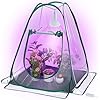
The Meonum Mini Pop-Up Greenhouse is aimed at gardeners who prefer a lightweight setup that can be assembled and stored with minimal effort. Its flexible steel hoops allow the structure to pop open from its storage bag in seconds, making it convenient for temporary indoor growing projects, seasonal seed starting, or gardeners who do not want a permanent greenhouse taking up space.
Transparent PVC sides allow you to see your plants without opening the enclosure. The large front opening can be rolled up and secured for watering and ventilation, then zipped closed to help maintain a warmer, more humid environment. The included PEVA waterproof mat also helps catch spills and makes it easier to keep the surrounding area clean.
The kit includes a 10W full-spectrum LED grow light bulb that attaches near the top of the greenhouse. Because light distribution can vary inside a small enclosure, positioning plants thoughtfully can help reduce uneven illumination. The flexible structure is convenient for storage, but it is not as rigid as a metal shelving greenhouse, so households with active children or pets should take extra care when choosing its location.
Best for: Gardeners who want a portable, foldable enclosure for seedlings and smaller plants.
Pros and Cons
| Pros | Cons |
|---|---|
| Pops open quickly | Less rigid than a metal-frame model |
| Foldable and convenient to store | Not ideal around active pets or children |
| Includes a 10W full-spectrum grow light | Light may not reach every corner evenly |
| Transparent cover and waterproof mat | Small growing area limits capacity |
Verdict: Choose the Meonum Mini Pop-Up Greenhouse if portability and quick setup matter more than a rigid frame or large growing capacity. It offers a straightforward way to create a small, covered environment for indoor seedlings and compact plants.
4. Patigrow Self-Watering Seed Starter Kit — Best for Starting Seeds

The Patigrow Self-Watering Seed Starter Kit is a specialized option for gardeners whose primary goal is germinating seeds and raising young seedlings. Rather than offering a tall enclosure for mature plants, it combines a covered seed tray, grow lighting, and a self-watering base in a compact package. Its 60-cell capacity provides space to start multiple varieties at the same time.
The humidity dome and base tray are made from thick, BPA-free material designed for repeated use. Adjustable built-in vents allow you to manage airflow as seedlings develop, while the LED grow light bars sit in designated grooves along the top. Each tray’s light arrangement uses 56 high-efficiency LED beads to provide illumination across the seed cells.
A controller provides single or double lighting modes, five dimming levels, and 3-hour, 6-hour, or 12-hour timer settings. The self-watering system uses a water reservoir and wicking material to help maintain moisture around the seed-starting cells. Plant labels and two small gardening tools are included, making the kit useful for beginners. However, heat-loving seeds such as tomatoes and peppers may still need a separate heat mat if your room or windowsill is too cool.
Best for: Seed starting, vegetable seedlings, herb propagation, and gardeners who want to manage several varieties in one tray.
Pros and Cons
| Pros | Cons |
|---|---|
| 60 seed-starting cells | Not designed for mature or tall plants |
| Self-watering reservoir and wicking material | Water levels still require monitoring |
| Integrated LED grow light bars | Some seeds may require extra warmth |
| Adjustable vents, dimming, and timer controls | Small tray capacity compared with a shelving unit |
Verdict: The Patigrow kit is a practical choice for people who want to focus on germination and early plant development. Its combination of lighting, humidity control, and self-watering features can simplify seed starting without requiring a full-size indoor greenhouse.
5. Gardyn Home 4.0 Indoor Hydroponic Garden — Best for Vertical Gardening

The Gardyn Home 4.0 offers a different approach to indoor gardening. Instead of enclosing plants inside a traditional greenhouse, it uses a vertical hydroponic system with growing columns and integrated lighting. This arrangement can make productive use of floor space while allowing leafy greens, herbs, flowers, and other compatible plants to grow upward and outward.
The system uses proprietary seed pods called yCubes, which fit into plant holders connected to the growing columns. Water containing nutrients is delivered to the roots, allowing plants to grow without conventional soil in the main system. Different seed collections are available, including options focused on salad greens, flowers, and culinary herbs. Its integrated approach can be appealing to people who want to grow fresh ingredients at home without maintaining numerous individual pots.
Gardyn also offers the optional Kelby app service, which uses connected sensors and cameras to provide plant-care guidance and customized watering and lighting recommendations. The subscription is an additional expense, so buyers should confirm current pricing, included credits, and renewal terms before subscribing. The garden can also be operated using manual controls. Routine maintenance remains important: the reservoir needs regular cleaning, roots should be inspected for rot or excessive growth, and plants may need pruning. Buyers should also review the manufacturer’s current privacy information before enabling camera-based features.
Best for: Indoor gardeners who want a vertical, soil-free growing system for herbs, leafy greens, and compatible edible plants.
Pros and Cons
| Pros | Cons |
|---|---|
| Vertical growing system saves floor space | Higher initial investment than a simple seed tray |
| Suitable for herbs and leafy greens | Requires routine cleaning and root inspection |
| Integrated lighting and water delivery | Replacement seed pods and nutrients may add costs |
| Optional app-based plant-care guidance | Optional subscription and privacy considerations |
Verdict: The Gardyn Home 4.0 is worth considering if you want to grow edible plants vertically with an integrated hydroponic system. It is not a traditional enclosed greenhouse, but its lighting and water-delivery approach make it a useful alternative for space-conscious indoor food production.
Which Indoor Greenhouse Should You Choose?
The right choice depends on what you plan to grow and how much room you have available. Each of these five products addresses a different indoor gardening need.
- Choose the Barrina Mini Greenhouse if you want multiple shelves, integrated grow lights, and room for a varied plant collection.
- Choose the Meonum Mini Greenhouse if you need a compact covered growing space with programmable lighting.
- Choose the Meonum Pop-Up Greenhouse if quick setup and convenient storage are your priorities.
- Choose the Patigrow Seed Starter Kit if you mainly want to germinate seeds and raise healthy young seedlings.
- Choose the Gardyn Home 4.0 if you prefer vertical hydroponic gardening for herbs, greens, and other compatible edible plants.
Tips for Getting Better Results from an Indoor Greenhouse
Even a well-equipped indoor greenhouse needs proper care. A few consistent habits can help create better growing conditions and reduce common problems.
- Set a suitable lighting schedule. Match the duration and intensity of supplemental light to the needs of your plant species and growth stage.
- Monitor temperature and humidity. Use a thermometer and hygrometer where necessary, and open vents when condensation or excess heat develops.
- Avoid overwatering. Check the growing medium and follow the needs of each plant rather than keeping every pot constantly wet.
- Provide adequate airflow. Ventilation helps reduce excessive humidity and supports a healthier growing environment.
- Clean trays and reservoirs regularly. Remove dead leaves, clean water-contact surfaces, and inspect roots for signs of rot or disease.
- Check plant spacing. Give leaves room to develop and avoid crowding plants beneath the grow lights.
Frequently Asked Questions
Are indoor greenhouses worth it?
Indoor greenhouses can be worthwhile for gardeners who want to start seeds, grow herbs, or maintain plants in rooms without suitable natural light. Their value depends on the plants you grow, the available space, electricity costs, and how much care the setup requires.
Can you grow vegetables in an indoor greenhouse?
Yes. Herbs, leafy greens, microgreens, and many seedlings can grow successfully indoors with suitable lighting, moisture, temperature, and airflow. Larger fruiting vegetables generally require more light, space, and careful environmental management.
Do indoor greenhouses need grow lights?
Not always. A greenhouse positioned near a suitable bright window may receive enough natural light for some plants. However, supplemental grow lights are useful when natural light is weak, inconsistent, or insufficient for the plant species being grown.
What is the difference between a mini greenhouse and a seed starter kit?
A mini greenhouse typically provides an enclosure for growing and protecting a range of plants. A seed starter kit focuses on germination and early seedling development, often using small cells, humidity domes, and specialized watering systems.
How do you prevent mold in an indoor greenhouse?
Avoid excessively wet growing media, provide appropriate ventilation, remove dead plant material, and clean trays and reservoirs regularly. Monitor humidity and water plants according to their needs rather than keeping the enclosure continuously saturated.
Can an indoor greenhouse be used year-round?
Many indoor greenhouses can be used throughout the year if you maintain suitable lighting, temperature, humidity, and watering conditions. The exact requirements depend on the plants being grown and the climate inside your home.
Final Thoughts: Find the Best Indoor Greenhouse for Your Home
The best indoor greenhouse is the one that fits your growing goals, available space, and preferred level of maintenance. The Barrina Mini Greenhouse stands out for its multi-tier design and integrated lighting, while the Meonum models offer compact and portable alternatives. The Patigrow kit is tailored to seed starting, and the Gardyn Home 4.0 provides a vertical hydroponic approach for growing edible plants.
Before making a purchase, compare the latest product specifications, included accessories, dimensions, and current prices. Choose a setup that supports your plants’ needs and makes regular care manageable.
With suitable lighting, balanced watering, and consistent maintenance, an indoor growing setup can help you enjoy gardening in every season.
Disclosure: As an Amazon Associate, the publisher may earn from qualifying purchases made through affiliate links in this article. Product features and availability may change; check the current Amazon listing before purchasing.
Related Posts

The 5 Best HEPA Filter Air Purifiers: Top Picks for Cleaner Indoor Air
Choosing the right HEPA filter air purifier can make a…

The 5 Best Toasters for Perfectly Golden Toast Every Time
Choosing the right toaster can make breakfast faster, easier, and…

The Best Electric Hot Pots: Top 5 Picks for Easy, Versatile Cooking
Looking for the best electric hot pots to make cooking…