
Keeping grill grates clean is much easier with the right cleaning tool. From woven-wire brushes and bristle-free scrubbers to nylon brushes and wooden grate scrapers, these five grill-cleaning tools offer different approaches for removing grease, food residue, and buildup. Below, we compare their design, cleaning performance, strengths, and limitations to help you choose a tool that fits your grill and cleaning routine.
Detailed Grill Brush Reviews
1. Grillart Grill Brush and Scraper

The Grillart Grill Brush and Scraper combines a long handle, woven wire bristles, and a scraper into one cleaning tool. Its handle is designed to provide a comfortable grip while giving you enough reach to work across the grill grates. The three-row cleaning head can cover several grate surfaces with each pass.
Its design is particularly useful when dealing with food residue, grease, and cooked-on barbecue sauce. The angled handle can help you apply additional pressure when working on stubborn areas, while the scraper provides another option for deposits that do not come away with brushing alone.
One important consideration with any wire-bristle grill brush is to inspect the brush regularly for loose or damaged bristles and replace it if necessary. This model is best suited to users who want a traditional brush-and-scraper combination and prefer a longer handle for easier reach.
| Pros | Cons |
|---|---|
| Three-row woven-wire cleaning head; Long handle; Integrated scraper; Good coverage across grill grates | Wire bristles require regular inspection; May not be ideal for users avoiding wire-bristle tools |
2. Scrub Daddy BBQ Daddy Grill Brush

The Scrub Daddy BBQ Daddy takes a different approach to grill cleaning by combining foam with woven stainless steel. Its 13-inch plastic handle includes a secondary grip near the head, giving you another place to apply pressure during tougher cleaning jobs.
The approximately 4-by-4-inch cleaning head is designed to work across the grate surface while its triangular shape can help reach between individual grates. The integrated scraper can also be used for cooked-on residue, although its operation requires changing the tool’s position.
This is an interesting choice for shoppers who want a bristle-free grill-cleaning design. The replaceable head system is useful for long-term use, although replacement heads add to ongoing ownership costs. Its larger head and ergonomic grip make it suited to substantial cleaning sessions.
| Pros | Cons |
|---|---|
| Bristle-free design; Woven stainless-steel construction; Secondary grip; Large cleaning head; Replaceable heads | Replacement heads add ongoing cost; Scraper operation can take some adjustment |
3. Weber Cold Clean Grill Brush
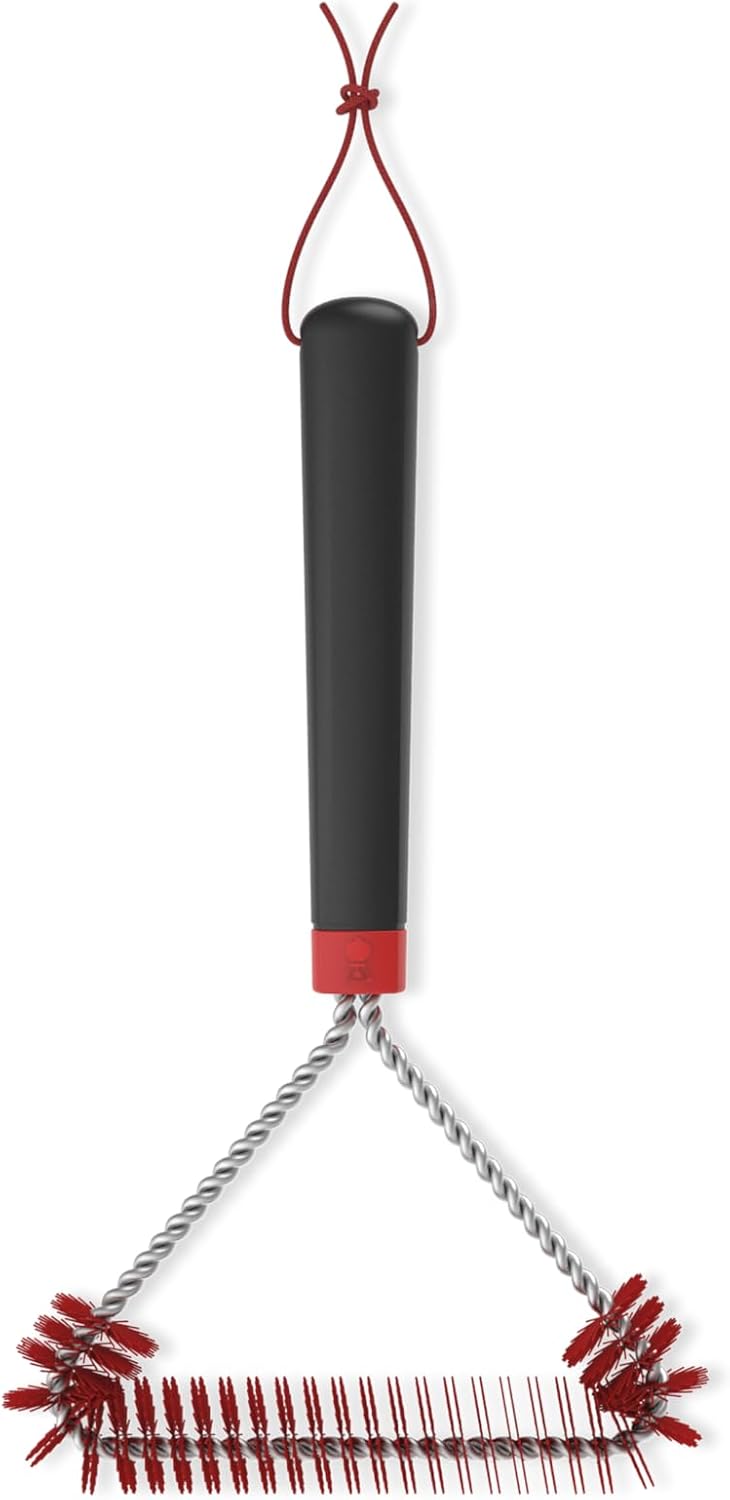
The Weber Cold Clean Grill Brush is a 12-inch nylon-head cleaning tool designed specifically for cleaning cool grill grates. Its three-sided, triangular design provides a broad primary cleaning surface while additional bristles along the angled sides can reach between grates and into grooves.
Nylon bristles offer a different cleaning experience compared with metal brushes. The brush can handle common food debris and grease buildup effectively, making it useful for routine maintenance when the grill is completely cool.
The main limitation is that nylon is not intended for hot-grill cleaning. It is therefore best suited to users who prefer to let the grill cool completely before cleaning. For heavy carbonized buildup, a more aggressive scraper or cleaning method may be needed.
| Pros | Cons |
|---|---|
| Nylon bristles; Three-sided design; Useful for cool grates; Reaches between grates and grooves; 12-inch handle | For cold cleaning only; Less aggressive against heavily carbonized deposits |
4. Traeger Wooden Grill Grate Scraper

The Traeger Wooden Grill Grate Scraper replaces conventional bristles with a solid hardwood construction and shaped scraping grooves. Its rosewood body includes multiple groove patterns designed to work against grill grates and remove surface grease and residue.
The deeper grooves are designed to align with compatible grill grates, while the opposite side provides shallower teeth for different grate spacing. The hollowed grip gives you a firm place to hold the scraper as you work across the cooking surface.
Because this is a wooden scraper rather than a traditional brush, it is better suited to surface scraping and preparation before washing. It is a useful option for shoppers who specifically want a bristle-free wooden tool and prefer a simple, durable design.
| Pros | Cons |
|---|---|
| Bristle-free; Hardwood construction; Multiple groove patterns; Comfortable grip; Useful for surface scraping | Less suited to deep debris removal; Works best as part of a broader cleaning routine |
5. Grill Floss Grill Scraper

The Grill Floss takes a precision-focused approach to grill cleaning. Instead of using a large brush head, its compact pincer-style cleaning head is designed to reach narrow spaces between grill grates and target residue in areas that can be difficult to reach with conventional brushes.
Its long, grippy handle provides control while the small cleaning head can work along the sides of individual grates. The tool also includes removable heads designed for different grate sizes, giving it additional flexibility for detailed cleaning jobs.
The compact design can make deep cleaning more precise, although it may take longer to cover an entire grill compared with a large brush. For that reason, it works particularly well as a specialized tool for stubborn or hard-to-reach areas rather than as the only cleaning tool in your grilling setup.
| Pros | Cons |
|---|---|
| Precision cleaning head; Reaches narrow spaces; Long grippy handle; Lightweight; Removable heads for different grate sizes | Slower for large surfaces; Better suited to deep cleaning than everyday quick brushing |
How to Choose a Grill Brush
The best grill-cleaning tool depends on your grill type, grate material, cleaning temperature, and the type of residue you normally encounter. A traditional woven-wire brush can provide aggressive scrubbing, while a bristle-free scrubber offers a different approach. Nylon is useful for cold-grill cleaning, wooden scrapers focus on surface buildup, and precision tools can reach areas that larger heads may miss.
Before cleaning, always follow your grill manufacturer’s instructions for the grate material and the cleaning tool you use. If you use a brush with wire bristles, inspect it regularly for loose or damaged bristles and replace it when necessary.
Final Thoughts
These five grill-cleaning tools cover several different cleaning styles. The Grillart combines brushing and scraping, the BBQ Daddy uses a bristle-free woven-stainless design, the Weber Cold Clean focuses on nylon-bristle cold cleaning, the Traeger provides a wooden scraping solution, and the Grill Floss offers precision cleaning between individual grates.
Consider the construction of your grill, the type of residue you need to remove, and whether you prefer hot or cold cleaning before choosing the right tool for your setup.
Related Posts

The Best Portable Power Stations: 5 Top Picks for Camping, Home Backup & Emergencies
A reliable portable power station can keep essential electronics, appliances,…

The 5 Best Hot Rollers for Voluminous Curls, Body & Long-Lasting Style
Looking for the best hot rollers to create salon-style curls,…

Top 5 Best High Chairs for Babies and Toddlers: Expert Picks for Comfort, Safety & Easy Feeding
Choosing the right high chair can make everyday mealtimes much…