
A sharp kitchen knife makes food preparation faster, smoother, and more enjoyable. Whether you’re slicing tomatoes, breaking down vegetables, or preparing meat, a properly sharpened blade offers better control and more consistent results. The challenge is choosing a sharpener that suits your knives, sharpening experience, and kitchen routine.
In this guide, we compare five popular knife sharpeners: the Chef’sChoice Trizor XV, Work Sharp Ken Onion MK.2, Cubikook CS-T01, Tumbler Rolling Knife Sharpener, and SHARPAL 162N. Each offers a different approach, from convenient electric sharpening to hands-on diamond sharpening systems.
We’ve focused on sharpening performance, ease of use, angle control, durability, and practical limitations to help you choose the right tool for your kitchen.
Affiliate disclosure: This article contains affiliate links. As an Amazon Associate, the publisher may earn from qualifying purchases at no additional cost to you. Product availability and prices may change.
Quick Comparison: Best Knife Sharpeners at a Glance
1. Chef’sChoice Trizor XV
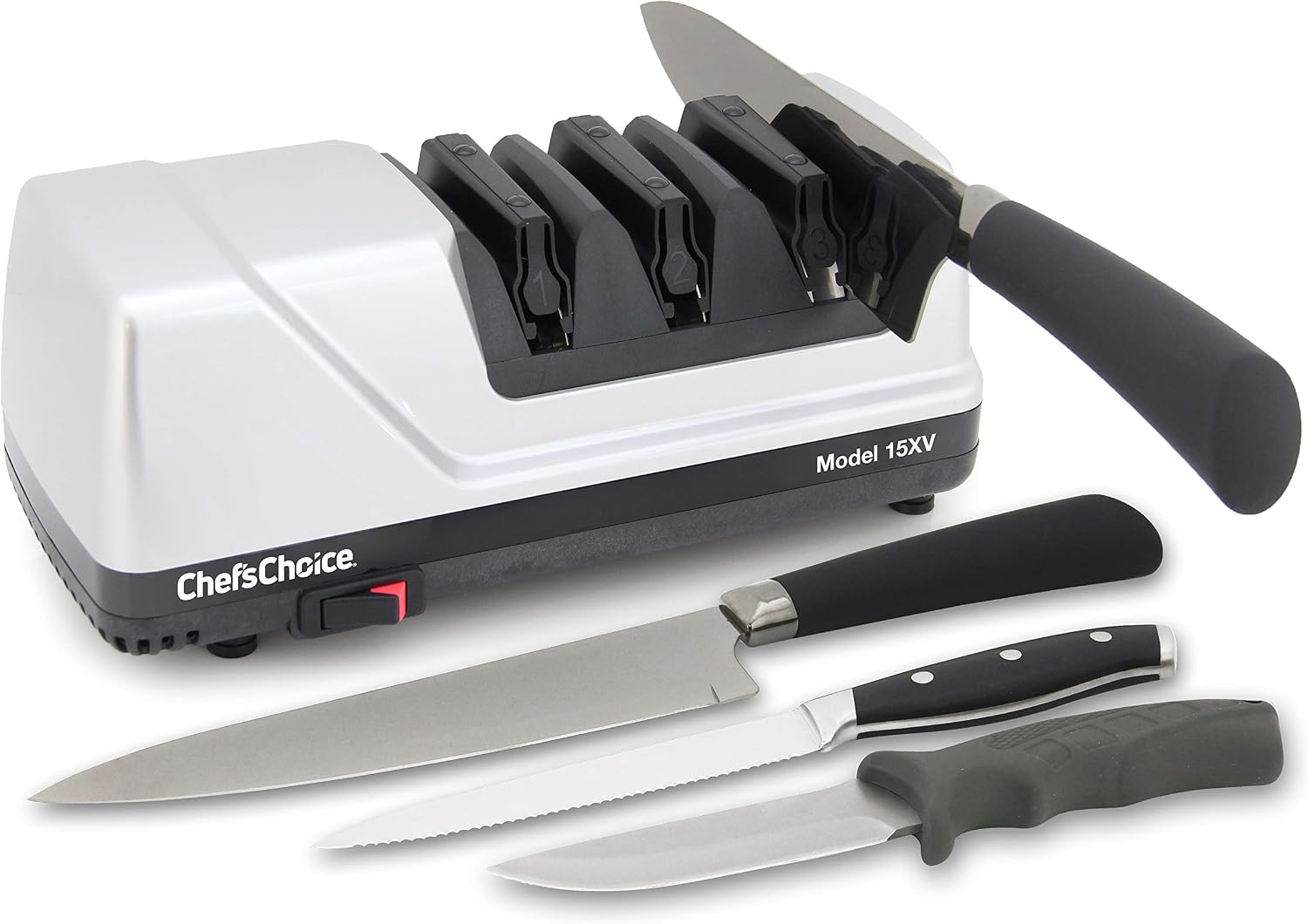
Best Overall
Electric sharpening with a consistent 15-degree edge.
Check Price on Amazon2. Work Sharp Ken Onion MK.2

Best for Adjustable Angles
Fast belt sharpening for a wide variety of blades.
Check Price on Amazon3. Cubikook CS-T01

Best Manual Sharpener
Three-stage sharpening in a compact design.
Check Price on Amazon4. Tumbler Rolling Sharpener
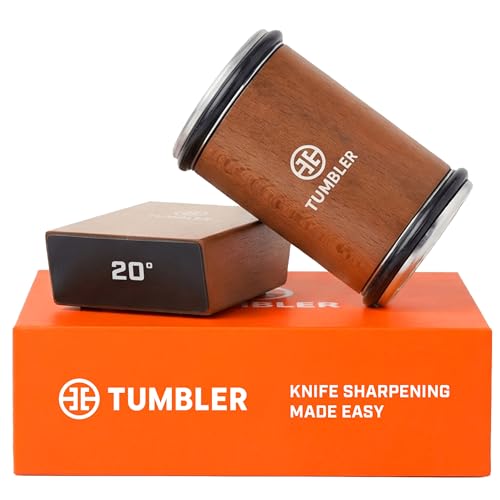
Best for Guided Angles
A rolling system designed for consistent bevels.
Check Price on AmazonHow We Compare These Knife Sharpeners
The best knife sharpener is not necessarily the most expensive or the most powerful. It should match your knife’s existing edge geometry, your sharpening skills, and the amount of maintenance you want to perform.
- Sharpening performance: How effectively the system restores a dull edge and produces a clean cutting surface.
- Angle control: Whether the sharpener holds a consistent angle or requires the user to maintain it manually.
- Ease of use: How approachable the system is for someone without extensive sharpening experience.
- Material removal: How aggressively the sharpener grinds the blade and whether frequent use may shorten blade life.
- Versatility: Whether it can accommodate different knife styles, blade lengths, and edge angles.
- Maintenance and safety: How much cleanup, upkeep, and protective equipment may be necessary.
The observations below reflect the supplied product descriptions and testing notes. They are intended to explain the practical trade-offs rather than suggest that every knife or user will achieve identical results.
1. Chef’sChoice Trizor XV — Best Overall Electric Knife Sharpener
The Chef’sChoice Trizor XV is an appealing choice for home cooks who want a sharp, consistent edge without learning the technique required for a traditional whetstone. Its three-stage electric sharpening system is designed to reshape, sharpen, and refine knife edges, making routine blade maintenance more approachable.
One of its defining features is its 15-degree sharpening geometry. This angle can work particularly well for compatible Asian-style and hybrid kitchen knives, producing an edge that feels keen and precise during everyday cutting. With appropriate use, the sharpened blade may retain useful sharpness for weeks or months before needing attention, although the interval depends on the knife, cutting surface, and frequency of use.
Construction quality is another attraction. The unit has a substantial feel, and the sharpening discs are designed for repeated use. The finishing stage can also help maintain compatible serrated edges, including those on bread knives. However, the fixed angle is not ideal for every knife, particularly blades designed around a traditional 20-degree-per-side edge or certain full-bolster designs. The relatively aggressive sharpening process also removes blade material, so owners of expensive, thin Japanese knives should consider a gentler alternative.
Key Features
- Three-stage electric sharpening and finishing system.
- 15-degree edge geometry for compatible knives.
- Designed for straight-edge and compatible serrated knives.
- Convenient option for regular home kitchen maintenance.
- Durable sharpening components designed for repeated use.
| Pros | Cons |
|---|---|
| Consistent results with less manual technique. | Fixed 15-degree angle limits compatibility with some blades. |
| Three-stage system combines sharpening and finishing. | Removes more material than gentler maintenance methods. |
| Suitable for many compatible everyday kitchen knives. | Bulkier than a simple manual sharpener. |
| Can maintain compatible serrated knife edges. | Requires electricity and careful adherence to instructions. |
Who should buy it? The Trizor XV is best suited to home cooks who want convenient electric sharpening and regularly use knives compatible with a 15-degree edge. If you own a collection of delicate Japanese blades or knives with substantially different factory angles, confirm compatibility before purchasing.
2. Work Sharp Ken Onion MK.2 — Best for Adjustable Sharpening Angles
The Work Sharp Ken Onion MK.2 takes a different approach from countertop pull-through sharpeners. Its powered abrasive belts and adjustable angle guide make it an option for users who sharpen different kinds of blades and want more control over edge geometry. It is particularly appealing to enthusiasts who maintain kitchen knives alongside outdoor, workshop, or utility blades.
According to the supplied testing notes, the system produced a highly polished, extremely sharp edge in approximately four and a half minutes on a dulled blade. Its adjustable guide covers approximately 15 to 30 degrees in one-degree increments, allowing users to select an angle appropriate for a particular knife. The belt system can also produce a convex edge, which may offer a useful balance of sharpness and durability when the angle and technique are chosen appropriately.
The biggest drawback is the operating environment. This is a powerful belt-based tool rather than a quiet kitchen appliance. The supplied notes report noise levels around 103.8 dB and describe airborne metal dust during sharpening. Those conditions make hearing protection, eye protection, appropriate respiratory protection, and a well-ventilated non-food-preparation workspace important considerations. Beginners should also learn how to control the belt and avoid removing excessive material.
Key Features
- Motorized abrasive-belt sharpening system.
- Adjustable angle guide spanning approximately 15 to 30 degrees.
- Variable-speed operation on the specified model.
- Designed for compatible knives, scissors, and selected other blades.
- Can produce a polished edge with suitable belt selection and technique.
| Pros | Cons |
|---|---|
| Wide angle adjustment offers excellent versatility. | Loud operation makes it unsuitable for many indoor kitchen settings. |
| Fast sharpening with the appropriate belt and technique. | Metal dust and debris require careful containment. |
| Can sharpen a variety of compatible blade types. | Protective equipment is important during operation. |
| Convex edges can offer a useful combination of sharpness and strength. | Less convenient for casual, quick kitchen touch-ups. |
Who should buy it? Choose the Work Sharp Ken Onion MK.2 if you value angle flexibility, speed, and the ability to sharpen a variety of blades in a dedicated workshop. It is less suitable if you need a quiet, low-mess sharpener that can be used beside food preparation areas.
3. Cubikook CS-T01 — Best Manual Knife Sharpener
The Cubikook CS-T01 is a compact manual sharpener designed for home cooks who want to restore kitchen knife edges without investing in a powered machine or mastering a freehand sharpening stone. Its three-stage arrangement combines diamond rods, tungsten carbide sharpening elements, and ceramic honing components to progress from edge preparation to refinement.
The diamond stage is intended to help prepare and realign the edge before the more aggressive tungsten carbide stage is used. The final ceramic stage then helps refine the cutting edge. This sequence can make the sharpening process easier to manage than relying on a single coarse sharpening slot, provided the user follows the instructions and applies appropriate pressure. Its manual operation also avoids the noise and electrical requirements of a powered system.
There are a couple of practical limitations. The grip is relatively plain, and the small ceramic rods may loosen after extended heavy use, according to the supplied testing notes. The tool is also less flexible than a system that allows users to select a precise angle. For routine sharpening of compatible kitchen knives, however, the straightforward three-stage layout can be attractive to beginners and anyone looking for a compact, easy-to-store tool.
Key Features
- Three-stage manual sharpening system.
- Diamond rods, tungsten carbide elements, and ceramic finishing components.
- No electricity or motorized belt required.
- Compact design for convenient kitchen storage.
- Designed to simplify routine sharpening for home cooks.
| Pros | Cons |
|---|---|
| Simple manual operation without a motor. | Less precise angle control than adjustable systems. |
| Three stages support sharpening and edge refinement. | Ceramic rods may loosen with heavy, prolonged use. |
| Compact and easy to store. | Grip comfort may be limited during extended sessions. |
| Accessible option for routine kitchen knife maintenance. | Not the best choice for every specialty or delicate blade. |
Who should buy it? The Cubikook CS-T01 is worth considering if you want a straightforward manual sharpener for compatible everyday kitchen knives. It is particularly appropriate for people who value compact storage and do not need the angle customization or speed of a powered sharpening system.
4. Tumbler Rolling Knife Sharpener — Best for Guided Angle Control
The Tumbler Rolling Knife Sharpener offers a guided alternative to traditional whetstones. Instead of requiring the user to maintain the sharpening angle entirely by hand, the system uses an angle guide and rolling abrasive disc to help create a consistent bevel. That makes it attractive to home cooks who want controlled sharpening without the learning curve of freehand stone work.
The supplied testing notes describe restoring a dull chef’s knife to a paper-slicing edge in around six minutes on the first attempt, with additional time potentially needed by beginners. The diamond disc removes material to restore the edge, while the stainless steel honing disc helps refine it. The roller is substantial and moves smoothly across a suitable countertop, and the guided approach can help reduce uneven bevels when the knife is compatible with the system.
However, the design has limitations. Sharpening many knives in one session can cause hand fatigue, and the angle guide may not accommodate smaller blades such as some paring or folding knives. The diamond disc can also remove metal quickly, so moderate pressure and careful technique matter. This system is best understood as a convenient guided sharpener for compatible kitchen knives rather than a universal solution for every blade.
Key Features
- Rolling sharpening design with a guided angle system.
- Diamond abrasive disc for sharpening.
- Stainless steel disc for honing and edge refinement.
- Designed to make repeatable sharpening angles easier to achieve.
- Particularly suited to compatible kitchen knives with sufficient blade length.
| Pros | Cons |
|---|---|
| Guided angle helps simplify sharpening technique. | Small blades may not fit the angle guide well. |
| Can produce consistent bevels on compatible knives. | Repeated rolling may cause hand fatigue. |
| Combines sharpening and honing discs. | Diamond disc can remove substantial metal if used aggressively. |
| Useful for people who find freehand whetstones difficult. | Less suited to users who prefer full manual angle control. |
Who should buy it? Consider the Tumbler if you want a guided sharpening system for compatible full-size kitchen knives and prefer repeatable angles over the hands-on technique of a whetstone. Check the product’s blade-length and angle compatibility before purchasing, especially if your collection includes small or unusually shaped knives.
5. SHARPAL 162N — Best Double-Sided Diamond Sharpening Stone

The SHARPAL 162N is designed for people who want more direct control over sharpening without the soaking and ongoing maintenance associated with many traditional waterstones. Its double-sided diamond sharpening surface provides a coarse 325-grit side for reshaping and a finer 1200-grit side for honing and finishing. This arrangement allows users to move from more substantial edge correction to finer refinement with the same tool.
The sharpening plate uses industrial-grade monocrystalline diamond abrasive on a stainless steel base. The supplied description also includes a storage case and a magnetic angle guide that supports four preset angles: 14, 17, 20, and 25 degrees. The guide can help beginners maintain a more consistent angle, while experienced users may appreciate the stone’s direct feedback and flexibility. Unlike many waterstones, the diamond surface can be used without soaking and is designed for straightforward cleaning.
The trade-off is that the SHARPAL 162N requires more user technique than a fully guided rolling or electric system. The guide helps establish the angle, but the user still needs to maintain appropriate blade contact, pressure, and stroke consistency. Care is also necessary when using the coarse side, which can remove material quickly. For people willing to learn a more hands-on method, the combination of two grits, preset angle options, and low-maintenance construction makes it a versatile option.
Key Features
- Double-sided diamond sharpening plate.
- 325-grit coarse surface for shaping and edge restoration.
- 1200-grit extra-fine surface for honing and finishing.
- Magnetic angle guide with 14-, 17-, 20-, and 25-degree settings.
- Designed for use without soaking or oiling.
- Storage case included in the described package.
| Pros | Cons |
|---|---|
| Two grit levels cover shaping and finer finishing. | Requires more manual technique than electric sharpeners. |
| Preset angles help reduce guesswork. | The angle guide does not eliminate the need for consistent strokes. |
| No soaking or oiling is required for the described dry-sharpening method. | The coarse surface can remove metal quickly. |
| Diamond abrasive offers a practical low-maintenance option. | May take practice to achieve consistent results across different blades. |
Who should buy it? The SHARPAL 162N is a strong candidate for cooks and sharpening enthusiasts who want a versatile diamond stone with guided angle options but are comfortable developing their technique. It is particularly appealing to users who want greater control than a pull-through sharpener offers without the soaking routine of a traditional waterstone.
Knife Sharpener Buying Guide: What Should You Look For?
1. Choose the Right Sharpening Method
Electric sharpeners are convenient for users who want a repeatable process with relatively little manual effort. Manual pull-through sharpeners are compact and straightforward, while rolling systems help guide the angle. Diamond stones provide more direct control but require practice. Belt-based sharpeners offer considerable versatility, although they demand a suitable workspace and more attention to safety.
2. Match the Sharpening Angle to Your Knife
Sharpening angle affects how the edge cuts and how well it holds up under use. A narrower angle can produce a keen edge, while a wider angle may provide additional support for some applications. The correct choice depends on the knife’s design, steel, intended use, and manufacturer recommendations. Do not assume that every kitchen knife should be sharpened to the same angle.
3. Consider How Much Metal the Sharpener Removes
Sharpening restores an edge by removing or reshaping material. Aggressive grinding can restore a damaged or very dull edge faster, but unnecessary material removal can shorten a blade’s useful life. For routine maintenance, use an appropriate finishing or honing method when possible, and avoid repeatedly using a coarse stage when it is not needed.
4. Think About the Knives You Own
Full-size chef’s knives and other long kitchen blades may work well with a rolling sharpener, while small paring knives, folding knives, serrated blades, and full-bolster designs can require different approaches. Check compatibility before buying. If you have expensive Japanese knives or unusual blade profiles, a suitable whetstone or a specialized sharpening service may be preferable.
5. Prioritize Safe Operation and Easy Cleanup
Always stabilize the sharpener and keep fingers away from the cutting edge and abrasive components. Follow the manufacturer’s instructions for pressure, stroke direction, and maintenance. Powered belt systems can produce significant noise and airborne debris, so use appropriate protective equipment and keep sharpening dust away from food, utensils, and food preparation surfaces.
Which Knife Sharpener Is Best for Your Needs?
| Your Priority | Recommended Option | Why It Makes Sense |
|---|---|---|
| Convenient electric sharpening | Chef’sChoice Trizor XV | Three-stage operation and a consistent 15-degree edge for compatible knives. |
| Wide angle adjustment and versatility | Work Sharp Ken Onion MK.2 | Adjustable belt sharpening for different compatible blades and edge geometries. |
| Simple manual sharpening | Cubikook CS-T01 | Compact three-stage design without a motor. |
| Guided sharpening with a rolling system | Tumbler Rolling Knife Sharpener | Angle guidance helps make repeatable sharpening easier on compatible knives. |
| Hands-on sharpening with two diamond grits | SHARPAL 162N | Coarse and fine surfaces plus four preset angle options. |
Frequently Asked Questions About Knife Sharpeners
How often should I sharpen my kitchen knives?
It depends on how often you cook, the knife’s steel and edge geometry, and the cutting surfaces you use. A frequently used chef’s knife may need periodic sharpening, while occasional home-use knives can go longer between sessions. Use an appropriate honing method between sharpening sessions when suitable for the blade.
Are electric knife sharpeners better than manual sharpeners?
Neither type is universally better. Electric models can save time and simplify angle control, while manual sharpeners are often quieter, more compact, and less dependent on power. Diamond stones and other manual systems provide more direct control for users willing to practice.
Can I use the same sharpener for every kitchen knife?
Not always. Knife angles, blade lengths, edge profiles, and steel types vary. Serrated knives, delicate Japanese blades, small paring knives, and full-bolster knives may need specialized techniques or tools. Always check compatibility and follow the knife manufacturer’s guidance.
What is the difference between sharpening and honing?
Sharpening removes material to create a new cutting edge or restore a damaged one. Honing helps maintain or refine the edge between sharpening sessions. The exact effect depends on the tool and blade, and a honing tool is not a substitute for sharpening a substantially dull knife.
Are rolling knife sharpeners suitable for beginners?
They can be. A guided angle system helps reduce some of the guesswork associated with freehand sharpening. However, users still need to position the knife correctly, apply appropriate pressure, and ensure that the blade fits the guide. Always practice carefully and verify compatibility with smaller knives.
Is a diamond sharpening stone a good choice for home use?
A diamond stone can be an excellent choice for someone who wants a durable, low-maintenance sharpening surface and is willing to learn the technique. A double-sided model offers both coarse and finer abrasive surfaces, but the user must still control the angle and avoid excessive pressure.
What is the safest way to sharpen a kitchen knife?
Use a stable work surface, follow the sharpener’s instructions, keep hands away from the blade path, and avoid rushing. For powered systems, use the protective equipment specified by the manufacturer and work in an appropriate location away from food preparation. Clean the knife and work area after sharpening.
Final Verdict: The Best Knife Sharpener to Buy
The right knife sharpener depends on how much convenience, control, and versatility you need. The five options in this guide serve different kinds of cooks, from people who want quick electric sharpening to those who prefer a more hands-on approach.
Best Overall: Chef’sChoice Trizor XV
For home cooks who value convenient electric sharpening and primarily use compatible knives, the Chef’sChoice Trizor XV is a compelling all-around option. Its three-stage system and consistent 15-degree geometry make routine edge maintenance easier, although its fixed angle will not suit every blade.
Best for Versatility: Work Sharp Ken Onion MK.2
If adjustable angles and the ability to sharpen a variety of compatible blades matter most, the Work Sharp Ken Onion MK.2 deserves consideration. Its speed and flexibility come with additional noise, dust, and safety requirements, making a dedicated workshop the more appropriate environment.
Best Manual Option: Cubikook CS-T01
For users who prefer a compact, straightforward manual tool, the Cubikook CS-T01 offers a convenient three-stage approach. It is a practical option for compatible everyday kitchen knives without the noise or bulk of a powered machine.
Best Guided Sharpening: Tumbler Rolling Knife Sharpener
The Tumbler is worth considering if you want help maintaining a consistent sharpening angle without learning freehand whetstone techniques. Its suitability depends on blade length, angle compatibility, and your willingness to work through a rolling sharpening process.
Best Diamond Stone: SHARPAL 162N
For users who want two abrasive grades, multiple angle options, and more direct control over sharpening, the SHARPAL 162N is an appealing choice. It takes more practice than a fully guided system, but it offers a flexible approach without the soaking routine associated with many traditional waterstones.
Before buying, compare the current product specifications, included accessories, compatible sharpening angles, and available warranty information. Amazon prices, inventory, and product configurations can change, so confirm the details on the product page before placing an order.
Related Posts

Best Microwave Safe Air Fryer: Top 5 Air Fryers and Accessories for Easy Cooking
Best Microwave Safe Air Fryer: Top 5 Air Fryers and…

Best Durable Air Fryer Accessories and Cookbooks for Busy Families: Top 5 Picks
Best Durable Air Fryer Accessories and Cookbooks for Busy Families:…

Best Affordable Air Fryer for Dorm Rooms: Top 5 Budget-Friendly Picks
Best Affordable Air Fryer for Dorm Rooms: Top 5 Budget-Friendly…