
Choosing the right wireless router can make a major difference in internet speed, coverage, gaming performance, streaming quality, and the reliability of your home network. From powerful Wi-Fi 7 models designed for multi-gigabit connections to affordable Wi-Fi 6 routers for everyday households, there are excellent options for different budgets and home sizes.
In this guide, we review five popular Amazon routers: the TP-Link Archer BE900, TP-Link Archer BE550, GL.iNet Flint 2, TP-Link Archer AX55, and TP-Link Deco 7 Pro BE63. Each model offers a different balance of speed, coverage, wired connectivity, features, and value.
Affiliate Disclosure: As an Amazon Associate, we may earn from qualifying purchases made through links on this page. Product prices and availability may change.
Quick Comparison: 5 Best Wi-Fi Routers
1. TP-Link Archer BE900 — Premium Wi-Fi 7 Router
TP-Link Archer BE900

The TP-Link Archer BE900 is designed for users who want a high-end Wi-Fi 7 router with powerful wireless performance and extensive wired connectivity. Its quad-band design makes it particularly interesting for demanding households with many connected devices, high-speed internet, gaming systems, desktop computers, and home servers.
One of the biggest advantages of the BE900 is its combination of wireless performance and multi-gigabit wired networking. If your internet connection and network devices can take advantage of multi-gigabit speeds, this router provides the connectivity needed for a high-performance home network.
However, its advanced hardware can be more than necessary for smaller homes or users with standard internet plans. The router is also physically large, so placement should be considered before buying. For users who want advanced Wi-Fi 7 capabilities and have compatible high-speed devices, it is a compelling premium option.
| Pros | Cons |
|---|---|
| Quad-band Wi-Fi 7 | Large physical size |
| Excellent high-speed connectivity | May be excessive for basic internet plans |
| Strong wired networking options | Requires compatible devices to maximize benefits |
2. TP-Link Archer BE550 — Mid-Range Wi-Fi 7 Router
TP-Link Archer BE550

The TP-Link Archer BE550 offers a more accessible way to move to Wi-Fi 7 without choosing an extremely high-end router. Its tri-band Wi-Fi 7 design is suited to households with multiple users who stream high-resolution video, download large files, play online games, and connect several devices at once.
A major strength is its wired connectivity. All five Ethernet ports are rated for 2.5Gbps, giving high-bandwidth wired devices such as gaming PCs, NAS systems, and other compatible equipment plenty of networking capacity. Setup and management can also be handled through TP-Link’s app or web interface.
The main limitation is its 5GHz range compared with some larger or more powerful solutions. It can still cover many homes effectively, while TP-Link’s mesh compatibility provides an upgrade path if additional coverage is needed. Larger homes with thick walls may benefit from a dedicated mesh system instead.
| Pros | Cons |
|---|---|
| Tri-band Wi-Fi 7 | 5GHz range can be limiting in larger homes |
| Five 2.5Gbps Ethernet ports | May require mesh expansion for difficult layouts |
| Easy app and web management | Some households may not need Wi-Fi 7 |
3. GL.iNet Flint 2 (GL-MT6000) — Flexible Wi-Fi 6 Router
GL.iNet Flint 2 (GL-MT6000)

The GL.iNet Flint 2 is a Wi-Fi 6 router aimed at users who want strong performance combined with advanced configuration options. It uses 2.4GHz and 5GHz bands and provides multiple wired networking options, making it suitable for homes with many bandwidth-heavy wired and wireless devices.
Its open-source-oriented firmware and extensive configuration options are among its biggest attractions. Users can configure features such as network-wide VPN functionality, Wi-Fi extenders or repeaters, and advanced networking functions. The USB port can also support cellular modem configurations for certain networking scenarios.
The Flint 2 does not offer the 6GHz band found on newer Wi-Fi 7 equipment, so it is not designed for users who specifically want the newest wireless standard. However, for users who value flexibility, customization, range, and strong Wi-Fi 6 performance, it offers a different approach from conventional consumer routers.
| Pros | Cons |
|---|---|
| Flexible configuration | No 6GHz band |
| Two 2.5Gbps WAN/LAN ports | Not the newest Wi-Fi generation |
| Useful advanced networking features | Advanced features may be unnecessary for basic users |
4. TP-Link Archer AX55 — Budget-Friendly Wi-Fi 6 Router
TP-Link Archer AX55
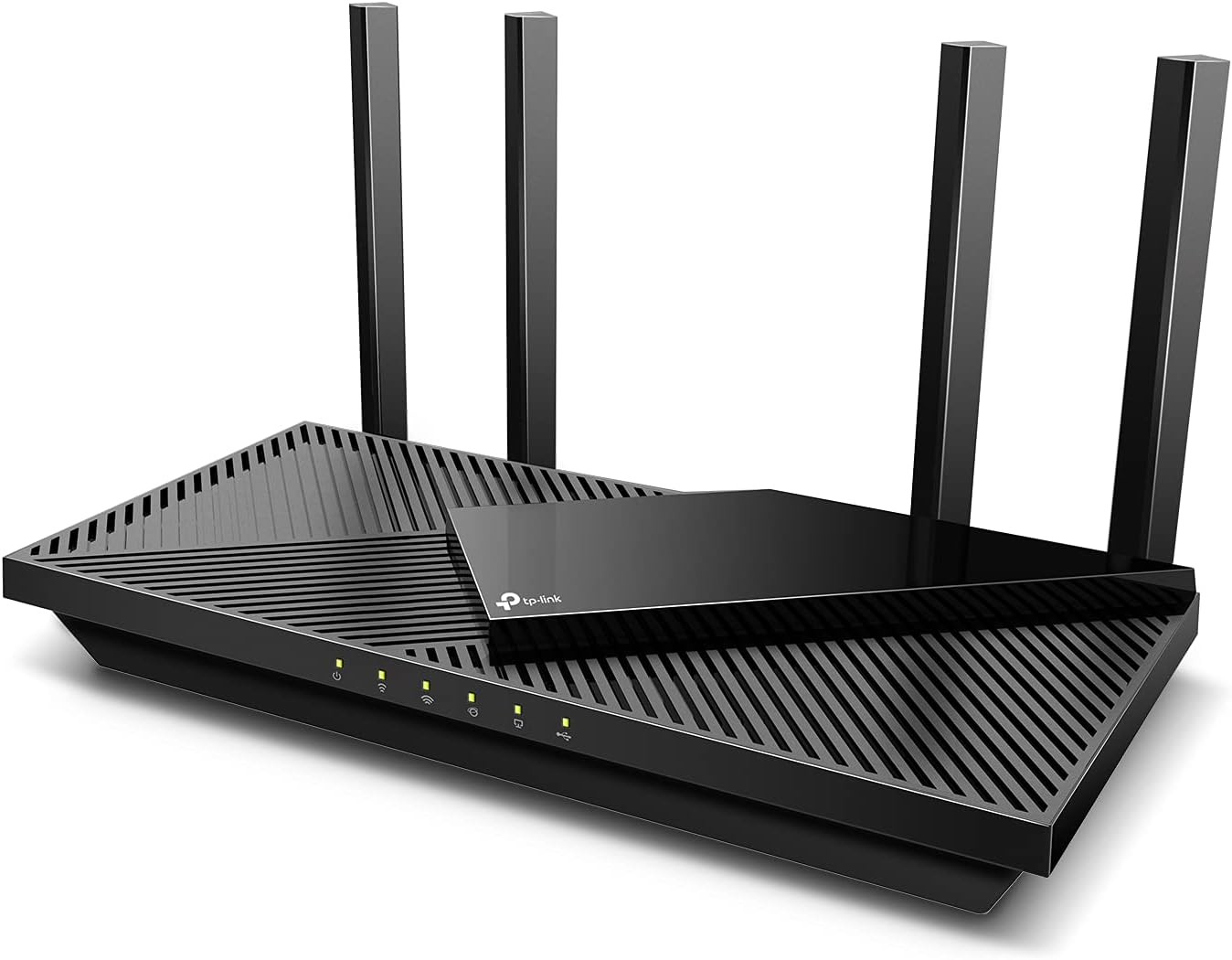
The TP-Link Archer AX55 is a practical Wi-Fi 6 option for homes that do not require the latest Wi-Fi 7 technology. Its conventional design and relatively compact footprint make it easy to position, while its wireless performance can support everyday activities such as streaming, browsing, downloads, and multiple connected users.
Its range is one of the important reasons to consider this router. It is designed for apartments and small-to-medium-sized homes, and compatible mesh functionality can provide an expansion option when a single router cannot cover every area effectively.
The main limitation is that it is a Wi-Fi 6 router rather than Wi-Fi 6E or Wi-Fi 7. Users with newer devices that specifically support the 6GHz band will not be able to use that additional band with the AX55. For households with internet service below 1Gbps and conventional Wi-Fi devices, however, its capabilities can be sufficient.
| Pros | Cons |
|---|---|
| Wi-Fi 6 performance | No 6GHz band |
| Compact conventional design | Not designed for the newest Wi-Fi 7 devices |
| Suitable for many apartments and medium homes | Large homes may need additional mesh equipment |
5. TP-Link Deco 7 Pro BE63 — Wi-Fi 7 Mesh System
TP-Link Deco 7 Pro BE63

The TP-Link Deco 7 Pro BE63 takes a different approach from traditional single-router setups. It is a tri-band Wi-Fi 7 mesh system designed for households where coverage throughout multiple rooms is more important than relying on one centrally located router.
Its expandable design allows users to position nodes around the home to improve coverage. The system can also provide strong performance for gigabit-class internet connections, while four 2.5Gbps Ethernet ports provide useful wired connectivity for compatible devices.
TP-Link’s app makes the system easier to configure and monitor. Users can view connected devices and manage various network settings, while basic parental-control features are available. Some more advanced parental-control and security functions require a paid subscription, which is an important consideration when evaluating the overall ownership experience.
| Pros | Cons |
|---|---|
| Tri-band Wi-Fi 7 | Some advanced features require a subscription |
| Expandable mesh coverage | Multiple nodes can increase total cost |
| Four 2.5Gbps Ethernet ports | May be unnecessary for smaller homes |
How to Choose the Right Wi-Fi Router
Before buying a router, consider your internet speed, home size, number of connected devices, wireless standards supported by your devices, and whether you need advanced wired networking.
- For demanding multi-gigabit networks: A high-end Wi-Fi 7 router such as the TP-Link Archer BE900 can provide the connectivity needed for compatible high-speed devices.
- For a mid-range Wi-Fi 7 setup: The TP-Link Archer BE550 combines Wi-Fi 7 with multiple 2.5Gbps Ethernet ports.
- For advanced customization: The GL.iNet Flint 2 offers extensive configuration and networking features.
- For a straightforward Wi-Fi 6 setup: The TP-Link Archer AX55 is designed for households that do not need the newest Wi-Fi generation.
- For larger homes and difficult coverage areas: The TP-Link Deco 7 Pro BE63 uses multiple mesh nodes to extend coverage throughout the home.
Final Thoughts
The best Wi-Fi router depends on your internet plan, home layout, connected devices, and networking requirements. High-end Wi-Fi 7 models can make sense for multi-gigabit households, while Wi-Fi 6 routers remain useful for users with more conventional networking needs. A mesh system can be particularly useful when walls, distance, or home layout make single-router coverage difficult.
Before purchasing, check the current Amazon listing for the latest price, availability, product configuration, and seller information.
Related Posts

The 5 Best Headphones Under $200 for Exceptional Sound, ANC & Gaming
Finding the best headphones under $200 means balancing sound quality,…

Best Wireless Earbuds: Top 5 Picks for Sound, ANC, Comfort & Battery Life
Choosing the right wireless earbuds means balancing sound quality, active…

What Are People Really Buying on Black Friday and Cyber Monday? 5 Popular Products to Watch
Black Friday and Cyber Monday shopping often bring attention to…