
Choosing the right camera bag can make a major difference when you’re carrying expensive camera bodies, lenses, laptops, accessories, and everyday essentials. The best camera bag should balance protection, comfort, organization, capacity, accessibility, and weather resistance without becoming unnecessarily bulky.
In this guide, we compare five camera bags designed for different photography needs. From the versatile Peak Design Everyday Backpack 20L and compact Lowepro Slingshot SL 250 AW III to the travel-focused WANDRD PRVKE Backpack, rugged Domke F-5XB Ruggedwear, and high-capacity Caden DSLR/SLR Camera Backpack, these options cover a wide range of shooting situations.
Best Camera Bags at a Glance
How to Choose the Best Camera Bag
The ideal camera bag depends heavily on how and where you photograph. A street photographer may want a compact shoulder bag that provides quick camera access, while a travel photographer may need room for multiple lenses, a laptop, personal items, and accessories.
- Capacity: Consider your camera body, lenses, batteries, memory cards, tripod, laptop, and personal gear.
- Protection: Look for padded camera compartments and construction that helps shield equipment from everyday bumps.
- Comfort: Shoulder straps, back padding, weight distribution, and adjustability become increasingly important during long shooting sessions.
- Weather resistance: Water-resistant materials and rain covers can provide additional protection when conditions change.
- Accessibility: Side, top, or rear camera access can make it easier to capture shots without unpacking the entire bag.
- Organization: Adjustable dividers, dedicated pockets, and accessory compartments help keep smaller equipment easy to find.
1. Peak Design Everyday Backpack 20L
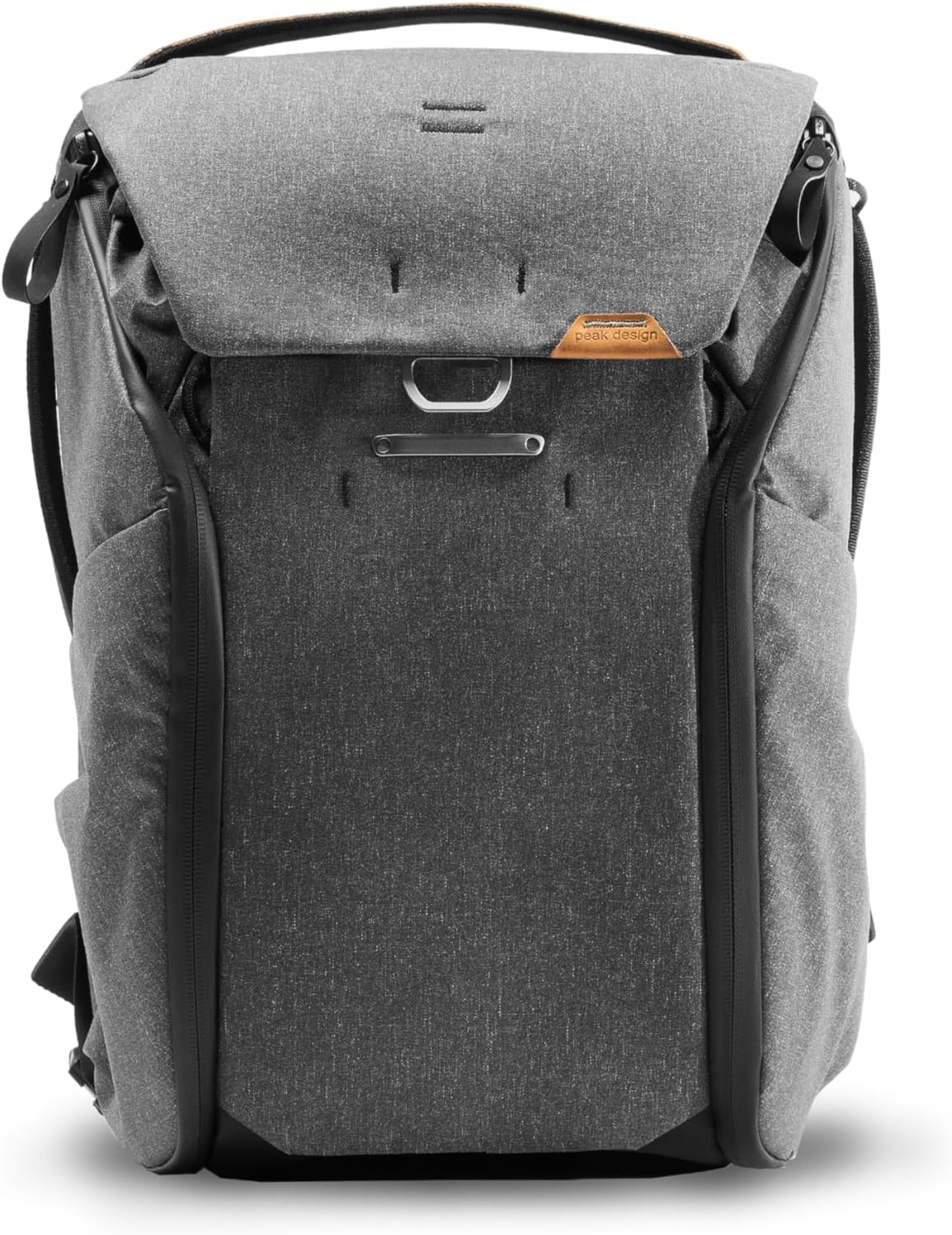
The Peak Design Everyday Backpack 20L is designed for photographers who want a sleek backpack that combines camera-carrying capability with everyday and travel functionality. Its dual-side camera access makes it possible to reach equipment quickly, while top access provides additional room when you need to carry more gear.
One of its standout features is the extensive organization. The bag has numerous pockets, including water bottle storage, with several internal compartments using stretchy materials and magnetic closures. Travel-friendly details such as a luggage pass-through and zipper pulls that can be secured together make the design particularly useful for photographers who frequently move between locations.
The pivoting shoulder straps can improve comfort during long days, while the durable, weather-resistant textiles provide useful protection when the bag is closed. The adjustable laptop sleeve also positions a computer toward the top of the compartment, making access easier while helping keep it from sitting directly on the bottom of the bag.
There are some limitations. A 16-inch MacBook Pro and tablet can make the laptop compartment feel tight, particularly when the bag is heavily loaded. The overall interior can also become cramped as more pockets are filled. When the expandable top is opened for larger loads, weather resistance around the upper closure can also decrease.
| Pros | Cons |
|---|---|
|
|
2. Lowepro Slingshot SL 250 AW III

The Lowepro Slingshot SL 250 AW III is a compact sling-style camera bag built for photographers who prefer an over-the-shoulder design. Its padded shoulder sling and back support make it comfortable for daily use, while the waist strap can help distribute the load when you’re moving around for longer periods.
The dedicated camera compartment is accessed through a side zipper and can accommodate a DSLR or mirrorless camera with an attached lens along with several additional small lenses. A separate upper compartment provides useful space for accessories, batteries, memory cards, snacks, or a lightweight jacket.
This compact design makes the bag particularly practical for day hikes, cycling around the city, or casual photography where carrying a large backpack would be unnecessary. The fabric is water-resistant, and although the exposed zippers can allow some moisture through during heavy rain, the included waterproof cover provides an additional layer of protection.
| Pros | Cons |
|---|---|
|
|
3. WANDRD PRVKE Backpack

The WANDRD PRVKE Backpack is built around a versatile travel concept. One of its most useful features is the removable camera cube, which allows the backpack to change roles depending on your trip. You can use the entire pack for travel, carry the camera cube separately, and then reinstall it when you need a dedicated day bag at your destination.
Camera accessibility is another strong point. A side-access opening lets you reach your camera quickly, while rear access provides a way to reach the entire camera kit. The rear opening also helps keep the back panel separated from dirt and moisture. A dedicated passport pocket on the rear panel adds another practical feature for travelers.
The PRVKE provides substantial carrying capacity. It can accommodate a camera body, several professional-sized lenses, a 16-inch MacBook Pro, tablet, and additional accessories. The durable Tarpaulin material and travel-focused construction make it well suited to photographers who need one bag for both photography and travel.
Its drawbacks are relatively specific. The magnets connecting the top handles may not always hold them together firmly in practical use, while the oversized roll-top buckle may not appeal to everyone. Some moisture can still enter during heavy rain, and the bag’s approximately 4.3-pound weight makes it heavier than several alternatives. Organization is also less comprehensive for photographers who prefer a dedicated pocket for every small accessory.
| Pros | Cons |
|---|---|
|
|
4. Domke F-5XB Ruggedwear

The Domke F-5XB Ruggedwear is a compact shoulder camera bag with a simple, durable construction. Its waxed canvas exterior and extensive double stitching are designed for long-term use, and Domke includes wax to help maintain the material over time.
The bag offers a straightforward carrying system with an over-the-shoulder strap and a belt pass-through option. Its compact dimensions make it well suited to carrying a mirrorless camera with an attached lens plus one additional lens. Another configuration is to carry the camera separately on a camera strap while using the bag for additional lenses and smaller equipment.
The main limitation is capacity and organization. The bag has only two drop-in pockets and does not provide extensive dedicated accessory storage. An iPad Mini can fit into the internal pocket, but because that area lacks sufficient exterior padding, smaller items such as a notebook or spare batteries may be more appropriate. Photographers who carry extensive equipment may find the available space restrictive.
| Pros | Cons |
|---|---|
|
|
5. Caden DSLR/SLR Camera Backpack

The Caden DSLR/SLR Camera Backpack focuses heavily on capacity. Its dedicated camera storage provides substantial room for photographic equipment, making it useful for photographers who want to carry a large amount of gear without moving to a much larger professional pack.
Beyond camera equipment, the backpack can also accommodate a 13-inch laptop, two water bottles, and a tripod. That combination makes it practical for photographers who need to transport multiple pieces of equipment to a shooting location or keep a substantial kit stored together.
Comfort is where the high capacity comes with trade-offs. When fully loaded with a travel tripod, the bag can bulge and feel awkward against the back, eventually becoming uncomfortable during prolonged carrying. Weather protection is another weakness, as heavy rain can penetrate the bag significantly. It also lacks extensive organization for smaller accessories.
For photographers who primarily need high storage capacity for transportation, car travel, or storage, its roomy design can be useful. However, photographers planning to carry a fully loaded bag on their back for extended periods should pay particular attention to comfort and weight distribution.
| Pros | Cons |
|---|---|
|
|
Frequently Asked Questions About Camera Bags
What should I look for in a camera bag?
Focus on capacity, padding, comfort, camera accessibility, organization, and weather protection. Your shooting style should determine which features matter most.
Are camera backpacks better than sling bags?
Neither design is universally better. Backpacks generally provide more balanced carrying and greater capacity, while sling bags can offer quicker access and a more compact profile.
Do camera bags need to be waterproof?
Complete waterproofing is not always necessary, but weather-resistant materials and rain covers can be valuable for outdoor photography. Exposed zippers and openings can still allow moisture inside during heavy rain.
Can I use a normal backpack for camera equipment?
You can, but a dedicated camera bag typically provides better protection and organization. If you use a regular backpack, padded camera inserts can help separate and protect equipment.
What size camera bag do I need?
Choose a size based on the equipment you normally carry rather than the maximum amount you might own. A smaller bag can be easier to carry, while a larger backpack provides flexibility for multiple lenses, electronics, and personal items.
Affiliate Disclosure: This article contains affiliate links. If you purchase a product through one of these links, we may earn a commission at no additional cost to you.
Related Posts

The 5 Best Portable Induction Cooktops for Fast, Precise Countertop Cooking
Portable induction cooktops are a convenient choice when you want…

The Best Clothing Irons: Top 5 Steam Irons for Smooth, Wrinkle-Free Clothes
Hamilton Beach Durathon 19803 Check Price on Amazon CHI Lava…

The 5 Best Shower Caddies to Keep Your Toiletries Organized
A cluttered shower can make even a quick morning routine…