
Choosing the right heart rate monitor can make workouts more measurable and help you understand your heart-rate data more clearly. From highly accurate chest straps to compact personal EKG devices and versatile wearable sensors, these five options cover different training and health-monitoring needs.
Below are five of the best heart rate monitors to consider, including the Polar H10 for serious training, KardiaMobile for personal EKG readings, the budget-friendly Polar H9, Garmin HRM-Fit for women, and the versatile Myzone MZ-Switch.
How to Choose the Best Heart Rate Monitor
The best heart rate monitor depends on how you plan to use it. Chest straps are generally a strong choice for exercise because they sit close to the heart and are designed to provide continuous workout data. A personal EKG device, on the other hand, is designed for short resting measurements rather than tracking an entire workout.
Connectivity is another important consideration. Before buying, check whether the monitor works with your smartphone, smartwatch, fitness equipment, and preferred training apps. Comfort also matters because even an accurate monitor is less useful if you do not want to wear it regularly.
1. POLAR H10 Heart Rate Monitor

The POLAR H10 is an excellent choice for athletes and fitness enthusiasts who prioritize accurate heart-rate tracking. Its chest-strap design is built for continuous monitoring during exercise, making it particularly appealing for structured cardio and endurance training.
One of its biggest advantages is connectivity. The monitor can connect with compatible smartphones, fitness applications, smartwatches, and ANT+ equipment, giving you flexibility when building a workout setup. This makes it easier to keep your heart-rate information connected across different training platforms.
The main consideration is comfort. While the strap is designed for exercise, some users may notice it more during movements that involve twisting or unusual body positions. For dedicated training, however, its accuracy and connectivity make the H10 a standout option.
| Pros | Cons |
|---|---|
| Excellent heart-rate accuracy | Chest strap may feel less comfortable during some movements |
| ANT+ and app connectivity | Requires wearing a chest strap |
| Excellent for serious training | Not as convenient as wrist-based tracking |
2. AliveCor KardiaMobile 1-Lead Personal EKG Monitor

The AliveCor KardiaMobile is different from a traditional fitness heart rate monitor. It is designed for taking quick, resting electrocardiogram readings, making it a compelling option for people who want a convenient way to record heart rhythm information.
The compact device is easy to carry and can be used by placing fingers on its contacts while remaining still for the measurement. Its connected app can make it convenient to review readings on a compatible phone or tablet and share information with a healthcare professional when appropriate.
Its biggest limitation is that it is not intended to replace a workout-focused heart rate sensor. Movement can interrupt the recording, so it is better suited to short resting measurements than continuous exercise monitoring. For health-focused personal EKG tracking, however, its compact design is highly convenient.
| Pros | Cons |
|---|---|
| Compact and portable | Not designed for continuous workout tracking |
| Quick personal EKG recordings | Requires staying still during readings |
| Convenient connected app | Different purpose from a sports chest strap |
3. Polar H9 Heart Rate Sensor

The Polar H9 is a strong option for shoppers who want dependable heart-rate tracking without moving into the higher-priced end of the category. Its chest-strap design provides continuous workout monitoring and works well with a variety of connected devices and fitness platforms.
Pairing is straightforward, and the sensor can connect with phones, watches, compatible fitness equipment, and popular training applications. This makes it particularly useful for runners, cyclists, gym users, and anyone who wants heart-rate information integrated into an existing fitness ecosystem.
The main compromise is the strap construction. Compared with some premium alternatives, the strap may feel less refined over extended use, and fit can become important as the material stretches. Even so, its reliable sensor performance and accessible price make it a practical choice.
| Pros | Cons |
|---|---|
| Reliable heart-rate data | Strap may feel less premium |
| Easy device and app pairing | Strap can stretch with repeated use |
| Good value for fitness users | Requires a chest strap |
4. Garmin HRM-Fit

The Garmin HRM-Fit takes a different approach to heart-rate monitoring by attaching directly to a compatible sports bra. This eliminates the need to wrap a traditional chest strap around the torso, which can make getting ready for a workout simpler and more comfortable for many users.
Its clip-on design is especially appealing for women who already use Garmin fitness equipment. Instead of adjusting a traditional strap, the monitor can be attached before exercise and positioned on a suitable medium- or high-support sports bra for stable tracking.
The biggest consideration is ecosystem compatibility. Users who already own a compatible Garmin watch can get substantially more value from the HRM-Fit, while shoppers looking for a standalone monitor that sends complete workout data directly to a phone may find the setup less flexible.
| Pros | Cons |
|---|---|
| Designed specifically for women | Works best within the Garmin ecosystem |
| Clips onto a suitable sports bra | Requires appropriate sports-bra support and fit |
| No conventional chest strap to adjust | Less appealing as a standalone phone-first solution |
5. Myzone MZ-Switch Heart Rate Monitor
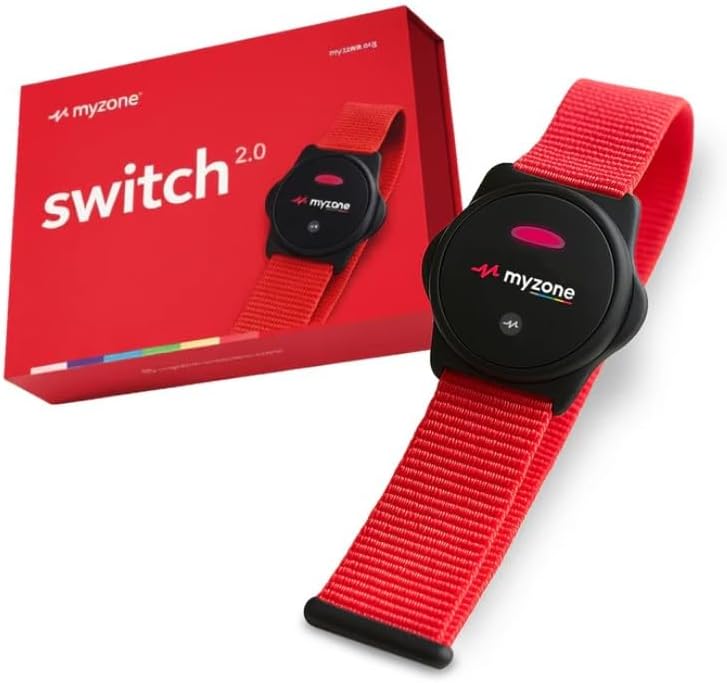
The Myzone MZ-Switch is one of the most versatile choices in this group because it gives users multiple wearing options. Depending on the workout and personal preference, it can be worn in different positions, making it easier to choose the setup that feels most natural.
For data-focused athletes, the amount of information available is another major attraction. Along with real-time heart rate, the connected system can provide workout summaries such as time spent in different heart-rate zones, average and peak heart rate, calories, and effort-related metrics.
The MZ-Switch can also be appealing for users who want to monitor more than individual workouts. Its broader connected ecosystem can support longer-term tracking and additional features, while the variety of wearing options can encourage more consistent use. The tradeoff is a higher price compared with simpler heart-rate sensors.
| Pros | Cons |
|---|---|
| Multiple wearing options | Costs more than basic heart-rate sensors |
| Detailed workout metrics | More features may be unnecessary for casual users |
| Strong connected fitness ecosystem | Best value comes from using the connected platform |
Which Heart Rate Monitor Is Best for You?
Best overall for serious fitness tracking: The POLAR H10 is a strong all-around choice when accuracy, connectivity, and workout compatibility are the priorities.
Best for personal EKG readings: The AliveCor KardiaMobile is designed for short resting EKG recordings rather than workout tracking.
Best value chest strap: The Polar H9 is worth considering if you want reliable heart-rate monitoring and broad connectivity without stepping up to a more premium model.
Best women-specific design: The Garmin HRM-Fit offers a convenient clip-on design for compatible sports bras, particularly for users already invested in Garmin devices.
Best for flexible wear and detailed data: The Myzone MZ-Switch stands out for its multiple wearing options and extensive workout metrics.
Final Thoughts
The best heart rate monitor is ultimately the one that matches your training style, preferred devices, and willingness to wear it consistently. Chest straps such as the Polar H10 and H9 are excellent for exercise-focused monitoring, while the KardiaMobile serves a different purpose with short personal EKG readings. Garmin’s HRM-Fit is particularly interesting for women who prefer a sports-bra attachment, while the Myzone MZ-Switch offers flexibility and extensive fitness data.
Before purchasing, consider whether you need workout heart-rate tracking, resting heart information, EKG functionality, multiple wearing positions, or integration with a particular smartwatch or fitness app. Choosing based on those priorities can help you get considerably more value from your heart rate monitor.
Important: Heart rate monitors and personal EKG devices are not substitutes for professional medical diagnosis or treatment. If you have concerns about your heart rhythm, symptoms, or health, consult an appropriately qualified healthcare professional.
Related Posts

5 Best Razer Mice for Gaming: Top Picks for FPS, MMO & Everyday Use
Choosing the right Razer mouse can make a noticeable difference…

Best PS5 Controllers for Taking Control of Your Games
Choosing the right PS5 controller can make a major difference…

5 Best Coffee Canisters for Fresh Beans: Vacuum, Airtight & Air-Reducing Coffee Storage
Fresh coffee beans can lose their aroma and flavor when…