
Choosing the best outdoor thermometer can make it easier to monitor changing weather, maintain comfortable indoor conditions, and plan your daily activities. Whether you need a simple wall-mounted thermometer, a wireless indoor-outdoor temperature monitor, or a comprehensive personal weather station, the right option depends on your budget and the information you want to track.
In this guide, we compare five outdoor temperature monitoring options, highlighting their key features, advantages, limitations, and ideal uses. Our top pick is the ThermoPro TP62 for its wireless temperature and humidity monitoring, while the other options offer useful alternatives for different homes and weather-monitoring needs.
Affiliate disclosure: As an Amazon Associate, this website may earn from qualifying purchases made through links in this article, at no additional cost to you.
Quick Comparison: Best Outdoor Thermometers
1. ThermoPro TP62
Best Overall

Wireless temperature and humidity readings with a backlit display.
Check Price on Amazon2. Taylor Wireless
Best for Simplicity

A straightforward digital display for indoor and outdoor temperatures.
Check Price on Amazon3. Taylor Metal Wall
Best Analog Design

A large wall-mounted dial for at-a-glance readings.
Check Price on Amazon4. U Unni Wireless
Best for Multiple Areas
Monitor readings from multiple locations with compatible sensors.
Check Price on Amazon5. WeatherFlow Tempest
Best Weather Station

A connected weather station for detailed local weather data.
Check Price on AmazonHow to Choose the Best Outdoor Thermometer
Before buying an outdoor thermometer, consider the features that matter most for your home or outdoor space.
- Accuracy: Choose a model with clearly specified measurement accuracy and a suitable operating temperature range.
- Display readability: Large digits, clear markings, and backlighting make readings easier to see.
- Wireless connectivity: Remote sensors allow you to check outdoor conditions without stepping outside.
- Humidity monitoring: A thermometer-hygrometer combination provides additional information about indoor comfort and moisture levels.
- Weather resistance: Look for an outdoor-rated sensor or construction appropriate for the location where you intend to install it.
- Additional weather data: A full weather station may be worthwhile if you also need wind, rainfall, pressure, or lightning information.
Detailed Reviews of the 5 Best Outdoor Thermometers
1. ThermoPro TP62 Digital Wireless Hygrometer – Best Overall
The ThermoPro TP62 Digital Wireless Hygrometer is a versatile choice for households that want to monitor both temperature and humidity indoors and outdoors. Its wireless design allows you to check conditions from a convenient indoor display instead of having to go outside to read a traditional thermometer.
The supplied display and sensor make it suitable for monitoring a primary indoor location and an outdoor area. The stated wireless range is up to 200 feet under suitable conditions, although walls, obstructions, and interference can affect actual performance. Additional compatible sensors can provide more flexibility when monitoring spaces such as a garage, basement, or patio. The display’s mounting options and magnetic back also make placement convenient.
Another appealing feature is its large LCD screen with a touch-activated backlight, helping you view readings in low-light conditions. Temperature and humidity information can be useful when assessing indoor comfort or checking changing outdoor conditions. For best results, position the outdoor sensor in a shaded, ventilated location and follow the manufacturer’s installation instructions.
Best for: Homeowners who want an easy-to-read wireless thermometer with humidity monitoring.
| Pros | Cons |
|---|---|
| Indoor and outdoor temperature monitoring | Wireless performance depends on the installation environment |
| Displays both temperature and humidity | Additional sensors may need to be purchased separately |
| Backlit screen and flexible placement options | Requires batteries and periodic maintenance |
Our verdict: The ThermoPro TP62 is a strong all-around option for everyday household temperature and humidity monitoring. Its combination of wireless convenience, readable display, and flexible placement makes it a sensible first choice for many homes.
2. Taylor Wireless Digital Indoor Outdoor Thermometer – Best for Simplicity
The Taylor Wireless Digital Indoor Outdoor Thermometer is a straightforward option for people who want to check the temperature inside their home and outside without investing in a more advanced weather station. Its compact design and digital interface suit everyday household use.
Its LCD screen displays indoor and outdoor temperature readings together, making it convenient to compare conditions at a glance. A wireless outdoor sensor helps reduce the need to step outside for a reading. This can be useful when deciding what to wear, checking temperature changes throughout the day, or monitoring general household conditions.
The main trade-off is its simpler feature set. The supplied product information does not indicate humidity readings, so users who need humidity monitoring should consider a thermometer-hygrometer instead. Small rear buttons may also be less convenient for people who frequently change settings. Check the current product listing for its measurement range, sensor specifications, and compatibility before ordering.
Best for: People who want basic wireless indoor and outdoor temperature readings without unnecessary features.
| Pros | Cons |
|---|---|
| Simultaneous indoor and outdoor readings | Does not provide the humidity information some households need |
| Compact, straightforward digital design | Small rear controls may be inconvenient |
| Useful for everyday temperature checks | Fewer weather-monitoring features than a full weather station |
Our verdict: The Taylor Wireless Digital Thermometer is worth considering if your priority is simplicity. It covers basic temperature monitoring without the extra complexity of multiple weather sensors and smart-home integrations.
3. Taylor Metal Wall Indoor Outdoor Thermometer – Best Analog Design
For buyers who prefer a traditional dial over a digital display, the Taylor Metal Wall Indoor Outdoor Thermometer offers a classic wall-mounted design. Its large face is intended to make temperature readings easier to see from a distance, making it a practical addition to a covered patio, garden area, shed, or suitable indoor wall.
The metal construction and mounting holes provide a traditional installation approach without requiring wireless sensors or a digital receiver. Its analog format can appeal to anyone who wants to check the temperature quickly without navigating electronic controls. Before installation, review the product specifications and confirm the dial measurements and scale are appropriate for your intended use.
One important consideration is exposure to the elements. Although a metal wall thermometer may be suitable for outdoor placement, the exact degree of weather resistance depends on its construction. Installing it in a protected location away from direct sunlight, heavy rain, and other harsh conditions can help improve the usefulness of readings and protect the instrument. This model is also distinct from a digital hygrometer, so confirm whether humidity measurement is included in the specific listing before purchasing.
Best for: Buyers who prefer a large analog dial and a simple wall-mounted thermometer.
| Pros | Cons |
|---|---|
| Classic analog appearance | No remote digital display |
| Large dial designed for quick reading | Placement affects readability and exposure |
| Wall mounting without wireless setup | Verify outdoor suitability and any additional measurement functions |
Our verdict: The Taylor Metal Wall Thermometer is a good candidate for anyone who values a traditional dial and uncomplicated installation. It is particularly appealing for covered outdoor spaces where a permanently mounted display is convenient.
4. U Unni Indoor Outdoor Wireless Thermometer – Best for Multiple Areas
The U Unni Indoor Outdoor Wireless Thermometer is designed for households that want to monitor temperatures in several locations from a single display. Rather than relying on one outdoor reading, a compatible multi-sensor setup can help you compare conditions in areas such as a backyard, garage, basement, or another room.
The large LCD display makes it easier to check readings from multiple sensor channels. The supplied product description identifies three sensors, allowing users to assign sensors to different locations and view the corresponding temperature information together. This can be useful for checking whether a garage is getting too cold, monitoring a basement, or keeping track of outdoor conditions before gardening or other activities.
Setup generally involves installing the batteries, selecting the sensor channels, and placing each sensor in its intended location. Actual wireless reception depends on distance, walls, and interference. If humidity readings are important, verify the exact version’s specifications before purchasing, as sensor configurations and functions can vary between models. Use a suitably protected location for outdoor sensors and follow the manufacturer’s recommendations for installation.
Best for: Families and homeowners who want to monitor temperature in several locations at once.
| Pros | Cons |
|---|---|
| Supports monitoring multiple areas | Requires batteries for the relevant units |
| Large LCD for convenient viewing | Wireless range can be reduced by obstructions |
| Useful for garages, basements, and outdoor areas | Sensor features and compatibility should be checked before ordering |
Our verdict: The U Unni wireless thermometer is a useful option when one reading is not enough. Its multi-location approach makes it worth considering for larger homes or anyone who wants to compare conditions in several spaces.
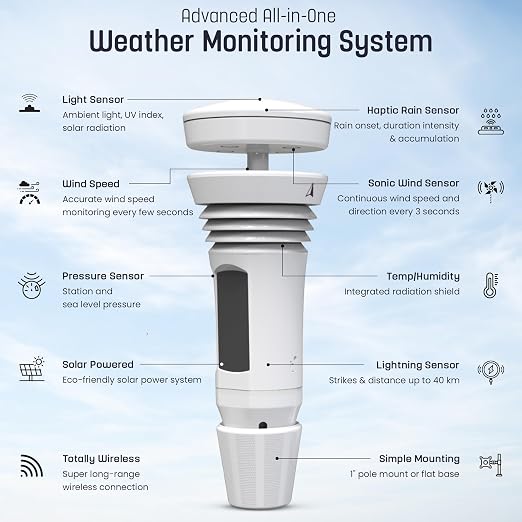
5. WeatherFlow Tempest Weather System – Best for Comprehensive Weather Monitoring
The WeatherFlow Tempest Weather System is designed for people who want more than a basic outdoor thermometer. It combines temperature monitoring with a broader set of local weather measurements, making it appealing to weather enthusiasts, gardeners, smart-home users, and homeowners who want more detailed information about conditions around their property.
Depending on the system configuration and supported features, Tempest provides measurements and information relating to wind speed, wind direction, rainfall, barometric pressure, and other weather conditions. Its connected design allows users to access weather information through a compatible app. The system also supports integrations with selected smart-home and weather platforms, helping users incorporate local observations into their routines.
Solar-powered operation and wireless connectivity help reduce the need for frequent manual interaction, while notifications can make changing conditions easier to track. Some automation features depend on compatible services, setup, and subscription or account requirements. Because this is a more advanced system than a standalone thermometer, buyers should consider the installation requirements, available mounting location, network coverage, and total cost before making a decision.
Best for: Weather enthusiasts and smart-home users who need detailed local weather data beyond temperature alone.
| Pros | Cons |
|---|---|
| Measures more than temperature alone | Typically costs more than a basic thermometer |
| App-based monitoring and supported integrations | Requires more setup than a simple analog instrument |
| Solar-powered outdoor system design | Some features depend on compatible services and connectivity |
Our verdict: The WeatherFlow Tempest is the most comprehensive option on this list for users who want a connected personal weather station. If you only need to know the outdoor temperature, a simpler model may be more economical; if you want detailed local observations and smart-home possibilities, Tempest is worth exploring.
Which Outdoor Thermometer Should You Buy?
The best choice depends on how much information you need and how you plan to use the thermometer.
- Choose the ThermoPro TP62 if you want wireless temperature and humidity readings with a convenient indoor display.
- Choose the Taylor Wireless Digital Thermometer if you prefer a simple digital display for indoor and outdoor temperatures.
- Choose the Taylor Metal Wall Thermometer if you like a traditional analog dial and permanent wall mounting.
- Choose the U Unni Wireless Thermometer if you need to monitor temperatures in multiple locations around your home.
- Choose the WeatherFlow Tempest if you want a connected weather station that provides information beyond temperature.
Tips for Getting More Accurate Outdoor Temperature Readings
Even a well-designed thermometer can produce misleading readings if it is installed incorrectly. Use these practical guidelines to get more representative measurements.
- Place the sensor in a shaded, well-ventilated location away from direct sunlight.
- Avoid mounting a sensor directly against hot walls, metal surfaces, air-conditioning exhausts, or other heat sources.
- Follow the manufacturer’s recommended mounting height and exposure guidelines.
- For wireless devices, test the connection between the sensor and display before permanently mounting the equipment.
- Check the manufacturer’s instructions for cleaning, battery replacement, and calibration where applicable.
- For weather stations, select an installation location that follows the manufacturer’s recommendations for wind, rainfall, and other sensor measurements.
Frequently Asked Questions
1. What is the best outdoor thermometer overall?
The ThermoPro TP62 is our overall pick for everyday home monitoring because it combines wireless temperature readings, humidity information, and a readable backlit display. Your best choice may differ depending on your preferred features and budget.
2. Are wireless outdoor thermometers accurate?
Wireless thermometers can provide useful temperature readings when the sensor is installed correctly and operates within its specified conditions. Accuracy depends on the device’s specifications, sensor placement, environmental exposure, and maintenance.
3. Is a thermometer with a humidity sensor worth buying?
A thermometer-hygrometer can be useful if you want to understand both temperature and moisture levels. Humidity information can help with indoor comfort, ventilation decisions, and monitoring certain storage or growing environments.
4. Can an outdoor thermometer stay outside in the rain?
Only if the particular thermometer or sensor is designed for that exposure. Check the manufacturer’s weather-resistance specifications and follow the recommended installation instructions. A protected location may be preferable for models that are not fully weatherproof.
5. What is the difference between an outdoor thermometer and a weather station?
A basic outdoor thermometer measures temperature. A more advanced weather station may also measure humidity, wind, rainfall, atmospheric pressure, and other conditions. Some systems provide app access, alerts, and smart-home integrations.
6. Where should I place an outdoor thermometer?
Choose a shaded, ventilated location that follows the manufacturer’s recommendations. Avoid direct sunlight and nearby surfaces or equipment that can create artificially high readings. A suitable position helps the sensor reflect the surrounding air temperature more accurately.
Final Verdict: The Best Outdoor Thermometers
The five options in this guide serve different needs, from simple temperature checks to comprehensive weather monitoring. The ThermoPro TP62 is our preferred all-around choice for households that want temperature and humidity information in one convenient wireless system. The Taylor wireless model suits buyers who want straightforward digital readings, while the Taylor metal wall model appeals to fans of traditional analog instruments.
For households monitoring several spaces, the U Unni wireless thermometer is worth considering. For users who want wind, rainfall, and connected weather information in addition to temperature, the WeatherFlow Tempest offers a more comprehensive approach.
Before purchasing, compare the current Amazon listing, specifications, sensor compatibility, installation requirements, and price. Choosing the right thermometer for your needs will help you monitor outdoor conditions more conveniently throughout the year.
Ready to compare your options? Use the Amazon links above to review current product details and availability before deciding which outdoor thermometer best suits your home.
Related Posts

Best Air Fryer for Meal Prep: Top 5 Air Fryer Cookbooks for Easy, Healthy Meals
Best Air Fryer for Meal Prep: Top 5 Air Fryer…

The 5 Best USB Hubs for Expanding Your Laptop’s Connectivity
Modern laptops and tablets are getting thinner, but that often…

Best Affordable Air Fryer for Kitchen Organization: Top 5 Picks for a Clutter-Free Kitchen
Best Affordable Air Fryer for Kitchen Organization: Top 5 Picks…