
Best HDMI Switches: Top 5 8K and 4K HDMI Switchers Reviewed
Choosing the right HDMI switch can make your entertainment setup easier to manage, whether you connect a gaming console, streaming device, desktop computer, or Blu-ray player to your television or monitor. The best HDMI switch offers reliable signal transmission, convenient input selection, and support for the resolution and refresh rate your devices require. Some models also provide advanced audio extraction, eARC compatibility, and high-bandwidth HDMI 2.1 features.
This guide compares five HDMI switching solutions, ranging from feature-rich 8K HDMI 2.1 models to a compact bidirectional 4K switch and a practical four-input option. Although the supplied topic mentions ergonomic air fryers, the actual products provided are HDMI switches, so this article focuses on the products themselves to deliver relevant, useful buying information.
When comparing these products, consider the number of HDMI sources you need, whether you require 4K at 120Hz or 8K at 60Hz, how your audio system connects, and whether remote control or automatic switching would make everyday use more convenient.
Quick Comparison: Top 5 HDMI Switches
1. OREI 8K HDMI Switch with Audio
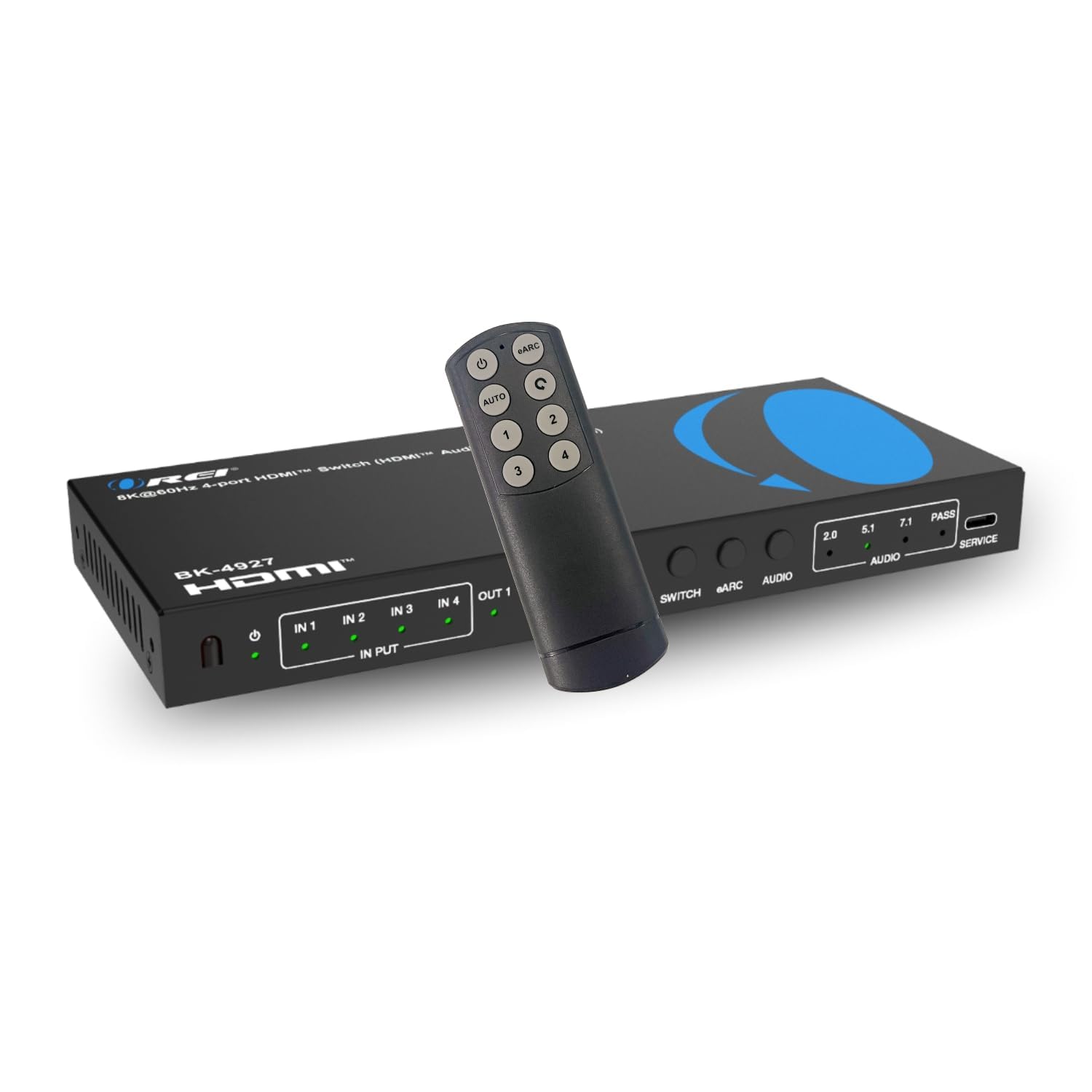
8K switching with optical and 3.5mm audio connections.
2. OREI 8K eARC HDMI Switch

Four inputs, one output, and eARC-oriented audio features.
3. 8K HDMI 2.1 Switch with Remote
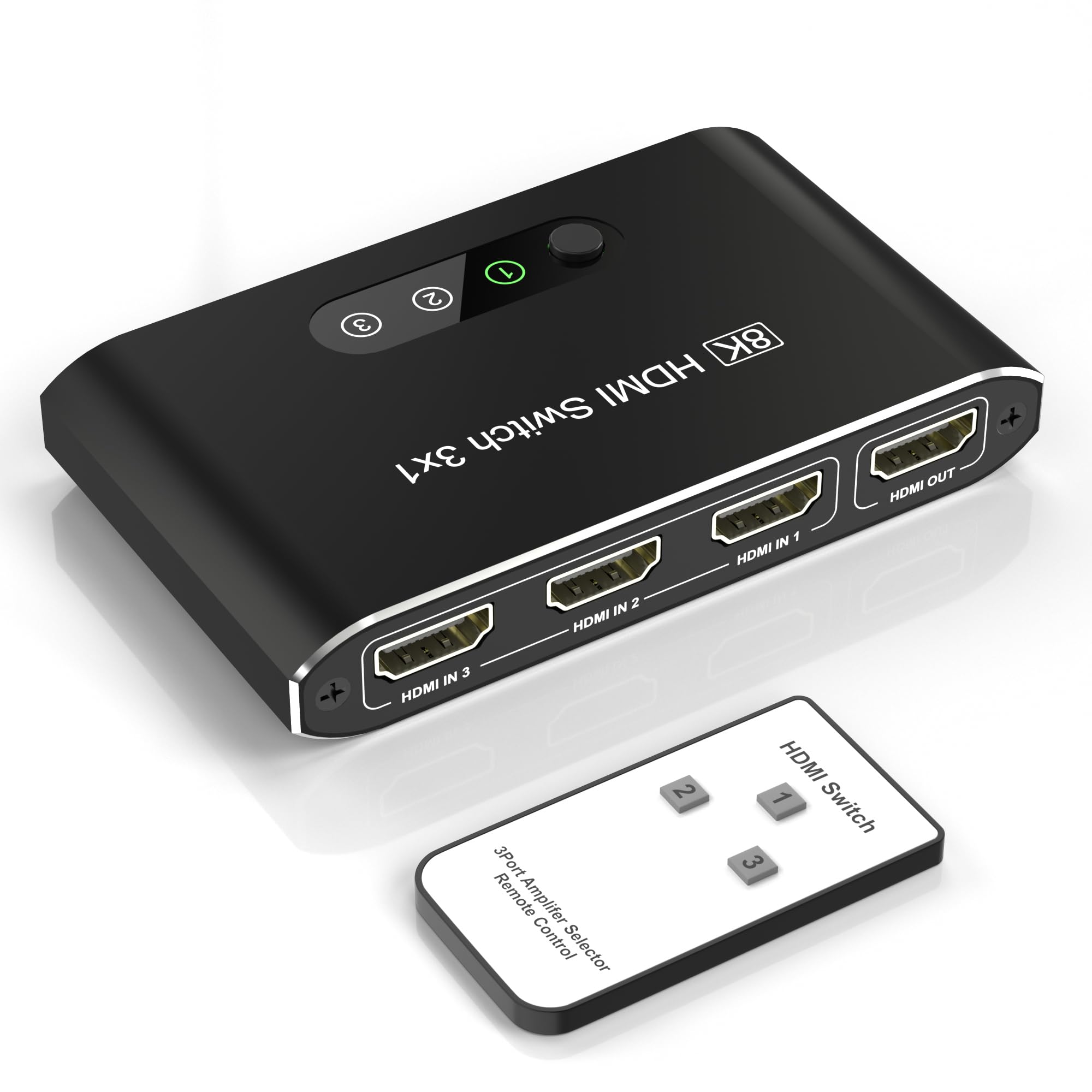
Three inputs, 8K support, and convenient source selection.
4. Acer Bidirectional HDMI Switch
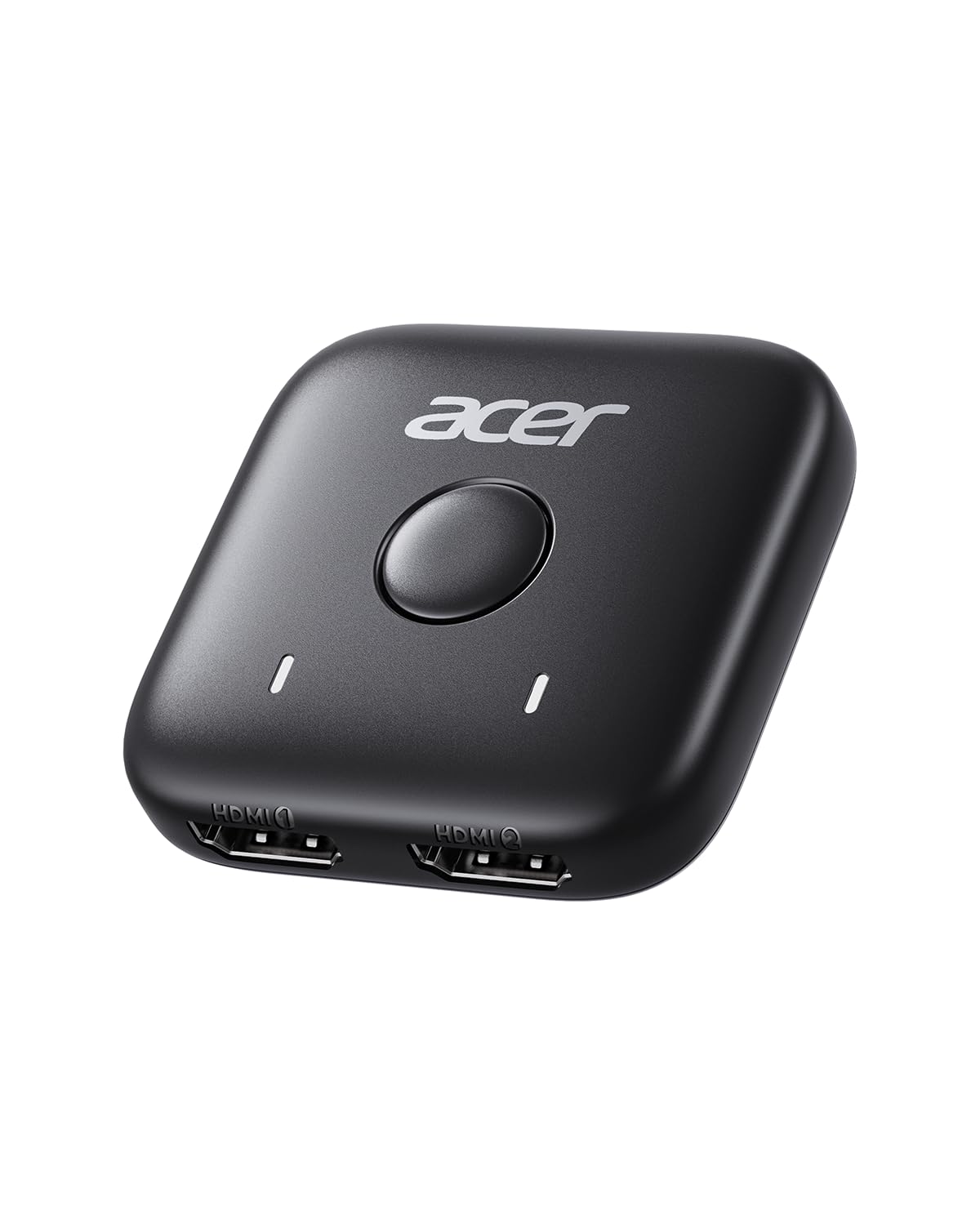
Flexible two-device switching at up to 4K 60Hz.
5. BENFEI 4-Port HDMI Switch

Four-source switching with support for 4K 60Hz and 2K 144Hz.
What to Look for in the Best HDMI Switch
Before choosing a switch, identify the capabilities your current devices actually need. An 8K label does not automatically guarantee that every device will operate at 8K resolution, and advertised refresh rates can depend on resolution, cable quality, source hardware, and display compatibility.
- Resolution and refresh rate: Match the switch to your display and gaming equipment. Competitive gamers may prioritize 4K at 120Hz, while compatible high-resolution displays may benefit from 8K support.
- Number of inputs: Count your consoles, streaming players, computers, and other HDMI sources before deciding between two, three, or four inputs.
- Audio compatibility: Check whether you need eARC, optical audio, a 3.5mm output, Dolby Atmos, or DTS:X passthrough.
- Switching convenience: A remote or automatic input switching can reduce the need to reach behind a television or monitor.
- HDMI cables and HDCP: Use suitable high-bandwidth cables and confirm compatibility with protected video sources, especially when connecting modern gaming consoles and streaming devices.
Detailed Reviews of the Top 5 HDMI Switches
1. OREI 8K 4-Port HDMI Switch with Audio Extraction
The OREI 8K 4-Port HDMI Switch is designed for entertainment setups that need several HDMI sources connected to one display. Its four-input configuration can help organize a television or monitor used with a gaming console, streaming box, computer, and another HDMI device. Instead of repeatedly unplugging cables, users can switch between connected sources through the device’s supported selection method.
One of its distinguishing features is the advertised audio connectivity. Optical and 3.5mm outputs can be useful when a soundbar, amplifier, or other audio equipment needs a connection that differs from the television’s available ports. Support for Dolby Atmos and DTS:X is also relevant to home theater enthusiasts, although the complete signal chain must support the intended audio format. The presence of an audio output alone does not guarantee that every surround-sound format will pass through every connection.
The advertised 8K capability makes this model worth investigating for users building a modern, high-resolution setup. Before buying, confirm the supported bandwidth, refresh rates, HDR formats, and HDCP requirements against your particular sources and display. Buyers who prioritize advanced audio routing alongside multiple HDMI inputs may find this model more suitable than a basic switch without audio extraction.
Key Features
- Four HDMI inputs for a multi-device entertainment setup.
- Advertised 8K video support.
- Optical and 3.5mm audio connectivity.
- Dolby Atmos and DTS:X compatibility claims.
- Suitable for evaluating more advanced home theater configurations.
| Pros | Considerations |
|---|---|
| Four inputs reduce cable swapping. | Advanced features may be unnecessary for simple setups. |
| Optical and 3.5mm outputs offer additional audio connection options. | Exact audio-format support should be confirmed for the intended connection. |
| Advertised 8K support offers high-resolution potential. | Actual performance depends on the entire HDMI setup. |
Best for: Users who want four HDMI inputs and additional audio connection options in a home theater or gaming setup.
Buying advice: Review the manufacturer’s specifications for audio extraction behavior, refresh-rate limits, and supported HDR formats before choosing this model for a premium AV receiver or sound system.
2. OREI 8K 4-Port HDMI Switch with eARC and Audio Extractor
The second OREI model is another four-input switching option, with eARC and audio extraction highlighted in its supplied product title. These capabilities can matter when a television, soundbar, AV receiver, and several HDMI sources need to work together. A properly compatible switch can simplify source management while helping users retain the audio features supported by their equipment.
Its advertised 8K at 60Hz and HDR capabilities make it worth considering for a high-bandwidth video environment. However, maximum resolution and refresh rate depend on the supported HDMI specification, source device, display, cable quality, and selected video format. Users planning to connect a modern gaming PC or console should verify whether the exact combination of resolution, refresh rate, HDR, and variable refresh rate is supported.
The eARC designation deserves particular attention. Enhanced Audio Return Channel is designed to return audio from a compatible television to a soundbar or receiver, while audio extraction may provide additional ways to route sound. Buyers should check the product documentation to understand the available ports, supported audio formats, and intended connection diagram. That step helps prevent confusion between conventional HDMI switching and audio-return functionality.
Key Features
- Four HDMI inputs and one output as described in the supplied product title.
- Advertised 8K at 60Hz video support.
- HDR compatibility claims.
- eARC-oriented connectivity and audio extraction features.
- Designed for setups involving several video sources and external audio equipment.
| Pros | Considerations |
|---|---|
| Four inputs accommodate multiple HDMI sources. | The setup may require careful attention to port direction and compatibility. |
| Advertised 8K and HDR support suits modern display systems. | Not every resolution, refresh rate, or HDR combination is necessarily supported. |
| Audio-focused features may help simplify a home theater. | Confirm eARC behavior and the exact audio output options before purchasing. |
Best for: Home theater users who need multiple HDMI sources and want to investigate eARC and audio extraction options.
Buying advice: Compare the product’s supported audio formats and connection diagrams with your television and soundbar. For a gaming-focused setup, confirm the required refresh rate and HDMI bandwidth rather than relying on the 8K label alone.
3. 8K HDMI 2.1 Switch, 3-in-1-Out with Remote
This three-input HDMI 2.1 switch is aimed at users who want to connect multiple entertainment devices without continually changing cables. The supplied product title identifies an aluminum enclosure, remote control, and automatic switching. Together, these features are intended to make source selection more convenient while providing a compact way to organize a gaming or media setup.
Its advertised 8K support and compatibility with 4K at 120Hz are particularly relevant to owners of compatible gaming consoles, gaming PCs, and high-refresh-rate displays. A suitable HDMI switch can help route signals between devices, but the display, source, cable, and switch must all support the chosen format. Users should also verify whether features such as variable refresh rate, auto low latency mode, and HDR passthrough are supported when those functions matter.
The remote can be useful when the switch sits behind a monitor or television, while automatic switching may reduce the need for manual input selection. Automatic behavior can vary depending on device power states and HDMI signal activity, so it is worth checking the manufacturer’s instructions. The advertised HDCP 2.3 support is another consideration for protected content, although the complete setup must remain compatible with the source and display.
Key Features
- Three HDMI inputs feeding one display output.
- Advertised HDMI 2.1 and 8K video support.
- Advertised 4K at 120Hz compatibility.
- Remote control and automatic switching features.
- Aluminum enclosure and HDCP 2.3 compatibility claims.
| Pros | Considerations |
|---|---|
| Remote control can make switching more convenient. | Three inputs may not be enough for larger entertainment systems. |
| Advertised 4K 120Hz support is relevant to modern gaming. | Confirm support for VRR and other gaming features separately. |
| Aluminum construction may suit a compact equipment setup. | Automatic switching behavior can vary by connected device. |
Best for: Gamers and entertainment users who want convenient three-source switching and advertised high-refresh-rate video support.
Buying advice: Check the full HDMI 2.1 feature list before using this switch with a high-end gaming display. A product that supports a particular resolution does not automatically support every advanced gaming feature at that resolution.
4. Acer HDMI Switch 2-in-1-Out, 4K 60Hz Bidirectional Switcher
The Acer HDMI switch takes a more straightforward approach than the advanced OREI models. Its supplied title describes a bidirectional design supporting 4K at 60Hz, which can be useful for users who need to manage two HDMI connections without investing in a larger multi-input switch. This type of device may be particularly appealing for a desktop workstation, bedroom television, or simple multimedia setup.
Bidirectional switching generally refers to using a device in one of two configurations: selecting between two HDMI sources for one display, or directing one source to one of two displays. These configurations are typically alternatives rather than simultaneous operation. Confirm the manufacturer’s instructions to understand how the direction is selected and whether switching requires a manual control.
The advertised 4K at 60Hz support makes this model worth considering for compatible televisions, office monitors, streaming players, and consoles that operate within that limit. It is not automatically the best choice for gamers seeking 4K at 120Hz, 8K video, or other high-bandwidth HDMI 2.1 features. For those requirements, a switch with explicitly documented support for the necessary formats is a better starting point.
Key Features
- Two-way HDMI switching functionality as described in the supplied title.
- Advertised 4K at 60Hz support.
- Potentially useful for simple desk or home entertainment arrangements.
- A practical alternative to larger four-input switches when only two connections are needed.
| Pros | Considerations |
|---|---|
| Bidirectional functionality offers flexible connection arrangements. | The two operating directions may not work simultaneously. |
| 4K 60Hz support suits many everyday displays. | Not specified as a 4K 120Hz or 8K solution. |
| A straightforward choice for smaller setups. | Confirm direction selection and HDR compatibility before purchase. |
Best for: Users who need a simple two-connection HDMI solution for a compatible 4K 60Hz display.
Buying advice: If you intend to connect two computers to one monitor, or one computer to two displays, verify that the switch supports your exact arrangement. Also check whether the display can show the selected source at the resolution and refresh rate you need.
5. BENFEI HDMI Switch 4-in-1-Out, 4K 60Hz
The BENFEI HDMI switch is designed for users who want to connect four sources to one display. That arrangement can be useful for a living room television used with a console, streaming player, computer, and another HDMI device. Keeping the sources connected can make an entertainment area easier to manage and reduce repeated cable changes.
The supplied product title advertises 4K at 60Hz and 2K at 144Hz support, making this model worth considering for compatible displays used for both entertainment and computer gaming. However, the actual supported combinations should be checked carefully. A switch may support different maximum refresh rates at different resolutions, and compatibility can also depend on HDR, chroma format, HDCP, and the quality of the HDMI cables.
BENFEI also advertises adaptive equalization support for HDMI transmission over longer distances, with the product title mentioning 10-meter transmission. Signal quality over long cable runs depends on the complete installation, including cable specifications and connected equipment. Before relying on a long-distance setup, check the manufacturer’s instructions and confirm that the intended cable length and video format are supported together.
Key Features
- Four HDMI inputs feeding one output.
- Advertised 4K at 60Hz video support.
- Advertised 2K at 144Hz compatibility.
- HDCP 2.3 compatibility claim.
- Adaptive equalization support and advertised 10-meter HDMI transmission capability.
- Designed for compatible consoles, streaming devices, and computers.
| Pros | Considerations |
|---|---|
| Four inputs suit multi-device entertainment setups. | The available ports do not increase the number of simultaneous display outputs. |
| Advertised 2K 144Hz support may suit compatible gaming monitors. | Verify the supported resolution and refresh-rate combinations. |
| Adaptive equalization may help with supported longer cable runs. | Long-distance performance depends on the cable and signal format. |
Best for: Users who need four HDMI inputs and want a switch for compatible 4K entertainment or higher-refresh-rate 2K gaming setups.
Buying advice: Confirm the exact refresh rate at your monitor’s native resolution and the maximum supported cable length. If your setup requires 4K at 120Hz or 8K video, verify that those specific modes are supported rather than assuming compatibility from the advertised 2K 144Hz specification.
Which HDMI Switch Should You Choose?
The best option depends on the number of devices you connect and the features you expect from your display and audio system. All five products serve different potential needs, so the most expensive or highest-resolution option is not necessarily the right choice for every user.
| Your Priority | Product to Consider | Why It May Fit |
|---|---|---|
| Multiple sources with additional audio connections | OREI 8K with optical and 3.5mm audio | Offers four inputs and advertised audio extraction features. |
| eARC-oriented home theater setup | OREI 8K eARC model | Highlights eARC and audio extraction functionality. |
| High-refresh-rate gaming and remote switching | 8K HDMI 2.1 switch with remote | Advertises 4K 120Hz support and remote control. |
| Two-way HDMI switching | Acer bidirectional switch | Designed for compatible two-device switching arrangements. |
| Four sources with 4K 60Hz or compatible 2K 144Hz use | BENFEI four-input switch | Advertises four inputs, high-refresh-rate 2K support, and adaptive equalization. |
Frequently Asked Questions
1. What does an HDMI switch do?
An HDMI switch lets you connect multiple HDMI source devices to a single display input. You select which source appears on the screen without repeatedly unplugging and reconnecting cables. Most conventional switches select one source at a time rather than displaying several sources simultaneously.
2. Is an 8K HDMI switch better than a 4K HDMI switch?
Not necessarily. An 8K switch may offer greater bandwidth and support for newer video formats, but a well-matched 4K switch can be more appropriate for a display that operates at 4K 60Hz. Consider resolution, refresh rate, HDR, audio compatibility, and the features supported by your equipment instead of choosing solely by the largest resolution number.
3. Can an HDMI switch support 4K at 120Hz?
Some HDMI 2.1 switches advertise support for 4K at 120Hz, including the third product reviewed here. You should verify that the selected switch supports the required bandwidth and that the source, display, and HDMI cables also support the same format. Other gaming features, such as VRR and ALLM, should be checked separately.
4. What is the difference between an HDMI switch and an HDMI splitter?
An HDMI switch generally routes one of several source devices to one display. An HDMI splitter generally distributes one source signal to multiple displays. A bidirectional product may support either of two connection arrangements, but it usually does not provide both functions simultaneously. Check the device’s documentation before buying.
5. Does an HDMI switch affect audio quality?
A compatible switch can pass supported digital audio formats through an HDMI connection, but the result depends on the switch’s capabilities and the connected source, display, and audio equipment. Audio extraction models may provide additional outputs. Confirm the required format, including Dolby Atmos or DTS:X, and check whether it is supported through the particular connection you intend to use.
6. Do HDMI switches work with PlayStation and Xbox consoles?
Many HDMI switches are designed for gaming consoles, but compatibility depends on the specific console features and display requirements. If you use a PlayStation 5 or a compatible Xbox console, verify support for your target resolution, refresh rate, HDR, HDCP, and any gaming features you rely on. High-refresh-rate gaming requires more than basic HDMI connectivity.
7. Is automatic HDMI switching always reliable?
Automatic switching can be convenient, but its behavior depends on the switch and the connected devices. Some equipment keeps an HDMI output active even when it is not being used, which may affect automatic source selection. A model with a manual button or remote can provide another way to choose the source.
8. Do I need special HDMI cables for 8K?
High-bandwidth video modes may require certified Ultra High Speed HDMI cables, depending on the resolution, refresh rate, and format. Use suitable cables throughout the signal path and avoid assuming that a switch’s advertised 8K capability guarantees 8K operation with every existing cable.
9. What should I check before buying an HDMI switch for a soundbar?
Check whether your setup requires eARC, ARC, optical audio, a 3.5mm output, or a specific surround-sound format. Confirm the direction of each connection and whether the switch supports the intended audio path. A product that offers audio extraction may be useful, but the supported output formats and routing behavior should match your soundbar or receiver.
10. How many HDMI inputs should I choose?
Count all your HDMI sources, including gaming consoles, streaming players, computers, and other equipment. Choose enough inputs for the devices you use regularly, ideally with a spare if you expect to expand your setup. A two-input bidirectional switch may suit a simple arrangement, while three- or four-input models provide more flexibility for a multi-device entertainment center.
Final Verdict: Choosing the Right HDMI Switch
The five products reviewed here cover a useful range of HDMI switching needs. The OREI models are worth investigating if you need several inputs alongside audio-related features. The third model is a potential fit for users interested in remote control and advertised 4K 120Hz support. The Acer bidirectional switch addresses simpler two-connection arrangements, while the BENFEI option emphasizes four inputs and advertised 4K 60Hz and 2K 144Hz compatibility.
Before placing an order, compare current specifications and pricing on Amazon, verify the exact supported video and audio formats, and make sure the product matches your equipment. Product titles and advertised capabilities are useful starting points, but the manufacturer’s detailed specifications should guide the final decision.
For more technology buying guides and product comparisons, visit Omnixbuy.
Disclosure: As an Amazon Associate, the publisher may earn from qualifying purchases made through affiliate links. Product availability, prices, specifications, and compatibility may change. Check the current product listing and manufacturer’s documentation before purchasing.
Related Posts

5 Best Tortilla Presses for Homemade Tortillas: Detailed Reviews & Buying Guide
Making fresh tortillas at home becomes much easier with the…

Best 5 Coffee Makers for Great-Tasting Coffee at Home
Choosing the right coffee maker can make a noticeable difference…

The 5 Best Rowing Machines for a Killer Full-Body Workout
A quality rowing machine can deliver an efficient full-body workout…