
Looking for the best science kits for kids to inspire curiosity, creativity, and hands-on learning? The right science kit can turn an ordinary afternoon into an exciting adventure filled with experiments, discoveries, and practical STEM skills. Whether your child enjoys mixing colorful solutions, building robotic gadgets, crushing objects with a science toy, or exploring electrical circuits, there is a science kit to match their interests.
In this guide, we review five engaging science kits, including the Doctor Jupiter My First Science Experiments Kit, Learning Resources Primary Science Lab Deluxe Set, CrunchLabs The Crunchinator, Smartivity Robotic Mechanical Hand, and Snap Circuits Arcade Electronics Exploration Kit. We compare their features, educational benefits, advantages, and potential drawbacks to help you find the right option for your child’s age, interests, and learning style.
Disclosure: As an Amazon Associate, we may earn from qualifying purchases made through links in this article, at no additional cost to you.
Quick Comparison: Best Science Kits for Kids
1. Doctor Jupiter Science Kit
Best Overall Science Experiments

Hands-on experiments for curious young scientists.
Check Price on Amazon2. Learning Resources Lab Set
Best for Preschoolers

Child-friendly tools for early science exploration.
Check Price on Amazon3. CrunchLabs The Crunchinator
Best for Physics Enthusiasts
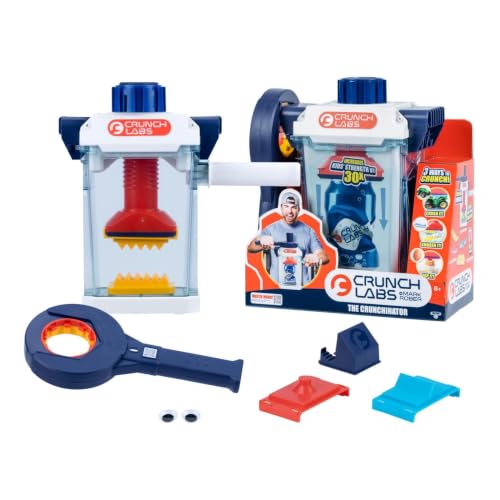
Explore force and crushing mechanics through play.
Check Price on Amazon4. Smartivity Robotic Hand
Best DIY Robotics Kit
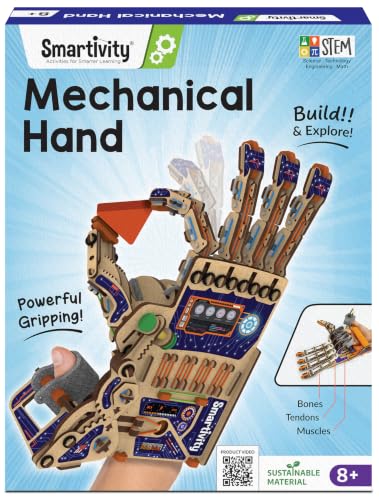
Build a functional mechanical hand.
Check Price on Amazon5. Snap Circuits Arcade Kit
Best Electronics Kit

Learn circuitry by building interactive projects.
Check Price on AmazonHow We Chose These Science Kits
A great science kit should do more than entertain children for a few minutes. It should encourage them to ask questions, experiment with ideas, solve problems, and understand how things work. We selected these five options based on their hands-on activities, educational potential, variety of projects, and appeal to different interests and experience levels.
- Educational value: Each kit introduces practical concepts from science, technology, engineering, or mathematics.
- Hands-on learning: Children can experiment, assemble components, test ideas, or build working creations.
- Age suitability: The selections cover different developmental stages and skill levels.
- Engagement: Activities are designed to encourage curiosity and keep children interested in learning.
- Variety: The list includes chemistry-style experiments, scientific tools, physics demonstrations, robotics, and electronics.
Detailed Reviews of the 5 Best Science Kits
1. Doctor Jupiter My First Science Experiments Kit
The Doctor Jupiter My First Science Experiments Kit is an excellent starting point for children who want to discover the excitement of science at home. Designed for young learners, this kit offers more than 100 experiment ideas, making it appealing to families who want plenty of activities without purchasing several separate kits. Its broad selection allows children to explore different scientific concepts through simple, engaging demonstrations.
Experiments include walking water, DIY slime, color-changing flowers, water fireworks, and fizzy volcanoes. These activities can help introduce concepts such as color mixing, chemical reactions, observation, and cause and effect. Illustrated manuals with step-by-step instructions can make it easier for children and parents to follow the activities, while the included equipment and ingredients reduce the need to gather many supplies separately.
Another advantage is the kit’s versatility. Parents can use individual experiments for short afternoon activities or turn them into a series of weekend science projects. It can also encourage children to make predictions, record observations, and discuss why a particular result occurred. Adult supervision is still important, especially when preparing materials or handling experiments with liquids and other ingredients.
Key Features
- More than 100 experiment ideas.
- Activities such as slime making, walking water, and fizzy volcanoes.
- Illustrated, step-by-step instruction manuals.
- Equipment and ingredients for a variety of activities.
- Suitable for introducing young children to STEM concepts.
| Pros | Cons |
|---|---|
| Large variety of experiments | Some activities require adult preparation |
| Approachable for beginners | Consumable ingredients may need replenishing |
| Encourages curiosity and observation | Some experiments may need household supplies |
Who should buy it? This kit is a strong choice for parents looking for an all-around introductory science set for curious young children. It is especially appealing to families who want varied experiments that combine entertainment with basic scientific learning.
Our verdict: The Doctor Jupiter kit stands out for its broad range of activities and accessible approach to science. If you want a versatile science gift that offers many opportunities for experimentation, this is an excellent option to consider.
2. Learning Resources Primary Science Lab Deluxe Set
The Learning Resources Primary Science Lab Deluxe Set is designed to make science exploration more approachable for preschoolers and early learners. Rather than focusing on a large collection of chemical experiments, it emphasizes hands-on discovery with child-sized tools that help children feel like real scientists. It is a useful option for introducing basic scientific routines, such as measuring, observing, transferring liquids, and comparing results.
The set includes tools such as test tubes, eye droppers, funnels, flasks, a magnifying scope, and safety glasses. These accessories can support a range of simple activities, including color mixing, examining small objects, and creating a homemade volcano with appropriate adult guidance. The kit is described as supporting 20 experiments, giving families a structured starting point for science play while leaving room for additional supervised activities.
Its child-friendly design is one of its most appealing features. Tools sized for little hands can make activities easier to manage and encourage children to participate independently as their confidence grows. Durable plastic components are practical for repeated use, although parents should still supervise activities and ensure that the tools are used for their intended purposes rather than as regular laboratory equipment.
Key Features
- Supports 20 science activities and experiments.
- Includes test tubes, droppers, funnels, and flasks.
- Features a magnifying scope and safety glasses.
- Child-sized tools designed for small hands.
- Encourages early scientific exploration and independence.
| Pros | Cons |
|---|---|
| Designed with young children in mind | Fewer listed experiments than some larger kits |
| Variety of reusable science tools | Some activities need extra household materials |
| Supports early observation and exploration | May be less challenging for older children |
Who should buy it? This set is particularly suitable for parents, preschool teachers, and caregivers who want to introduce science through simple activities and reusable equipment. It can be a helpful choice for children who enjoy handling tools and exploring how things work.
Our verdict: The Primary Science Lab Deluxe Set is a practical choice for early STEM education. Its focus on accessible tools and simple experiments makes it especially appealing for younger children who are just beginning their science journey.
3. CrunchLabs by Mark Rober The Crunchinator
The CrunchLabs by Mark Rober The Crunchinator takes a different approach to science learning by making physics an interactive experience. Instead of following a traditional experiment manual, children place an object inside a clear chamber and turn a wrench to operate a kid-friendly crushing mechanism. This hands-on process can make abstract ideas about force and mechanical movement easier to understand.
The product is inspired by the entertaining science demonstrations associated with Mark Rober. Children can observe what happens when force is applied to different objects and begin asking questions about material strength, pressure, and how mechanical systems transfer force. The clear chamber helps keep the activity contained, while the operating mechanism gives children a direct role in the experiment.
The included QR code provides access to additional videos that explain the science behind the activity. This combination of physical experimentation and video-based explanations can be useful for children who learn best by watching a demonstration and then trying it themselves. Because the activity involves a crushing mechanism, adults should follow the manufacturer’s safety guidance, supervise use, and ensure children keep their fingers clear of moving parts.
Key Features
- Interactive, hand-operated crushing mechanism.
- Clear chamber for observing the experiment.
- Introduces force distribution and basic physics concepts.
- QR code access to additional educational videos.
- Designed for children interested in engineering and science demonstrations.
| Pros | Cons |
|---|---|
| Highly interactive physics demonstration | Focuses on a narrower range of scientific concepts |
| Combines hands-on play with educational videos | Requires attention to moving parts and safety rules |
| Appeals to children interested in mechanical systems | May offer less variety than a multi-experiment kit |
Who should buy it? The Crunchinator is worth considering for children who enjoy engineering toys, mechanical gadgets, and visually engaging science demonstrations. It may also appeal to families whose children already enjoy science videos and want to explore related concepts in person.
Our verdict: The Crunchinator is a distinctive STEM toy that makes physics more tangible through experimentation. It is a compelling choice for children who prefer interactive mechanical activities over traditional chemistry-style science kits.
4. Smartivity Robotic Mechanical Hand
The Smartivity Robotic Mechanical Hand is a construction-based STEM kit that lets children build a functional mechanical hand from individual components. Using materials such as wood, rubber bands, connectors, and foam, children assemble a working model that demonstrates how mechanical structures can imitate some of the movements of a human hand. It is particularly interesting for young builders who enjoy robotics, superhero gadgets, and engineering challenges.
The building process provides an opportunity to explore how bones, tendons, and muscles contribute to movement. As children assemble the components and see the mechanism operate, they can develop a better understanding of connections, tension, and mechanical motion. The activity also encourages following instructions, recognizing component relationships, and troubleshooting when a part does not work as expected.
Once assembled, the mechanical hand can be used to pick up objects and explore simple gripping actions. This gives children a practical way to test their creation instead of leaving it as a static model. Construction may take patience, especially for younger builders, so adult assistance can be useful when interpreting instructions or handling small components. Families should also check the manufacturer’s recommended age and assembly guidance before beginning.
Key Features
- DIY construction project for a functional mechanical hand.
- Uses wood, rubber bands, connectors, and foam components.
- Introduces basic concepts related to tendons, muscles, and movement.
- Encourages mechanical reasoning and problem-solving.
- Allows children to test the completed hand with simple objects.
| Pros | Cons |
|---|---|
| Combines building with practical science concepts | Assembly requires patience and attention to detail |
| Completed model can be used interactively | May require adult help for some builders |
| Encourages engineering and problem-solving | Less focused on chemistry and general experiments |
Who should buy it? This kit is a strong option for children who enjoy building projects, mechanical toys, and learning how machines imitate real-world movements. It can also be an engaging gift for kids interested in robotics or engineering.
Our verdict: The Smartivity Robotic Mechanical Hand turns an engineering lesson into a practical building experience. It is an appealing choice for children who enjoy assembling something themselves and testing how their creation works.
5. Snap Circuits Arcade Electronics Exploration Kit
The Snap Circuits Arcade Electronics Exploration Kit introduces children to electricity and electronic engineering through a building-block-style system. Instead of requiring children to solder wires or handle complicated components, the snap-together design makes it easier to assemble circuits and experiment with how different electronic parts work together. This can help make basic electrical concepts more approachable for beginners.
The kit is designed around 200 projects and more than 20 games, providing a broad range of activities for children who enjoy interactive challenges. Example projects include a programmable word fan, a tri-color light orb, and a dual-LED display. As children assemble the components, they can begin exploring how circuits are connected and how electricity powers lights, displays, and other electronic effects.
The arcade theme helps connect technical learning with play, which may encourage children to continue experimenting after completing their first few projects. It can also create opportunities for parents to discuss electrical pathways, switches, inputs, and outputs in simple terms. Families should follow the included instructions, use only the specified power source, and supervise younger children during assembly and play.
Key Features
- Supports 200 electronic projects.
- Includes more than 20 games and interactive activities.
- Snap-together components simplify circuit assembly.
- Introduces electricity, circuitry, and engineering concepts.
- Includes projects featuring lights, displays, and electronic effects.
| Pros | Cons |
|---|---|
| Large selection of projects and games | May feel technical for children new to electronics |
| Accessible snap-together circuit design | Requires careful following of circuit instructions |
| Combines engineering concepts with interactive play | Best suited to children interested in electronics |
Who should buy it? The Snap Circuits Arcade kit is worth considering for children who enjoy technology, electronic gadgets, building projects, and games. It can be particularly appealing to older elementary-school children who want to move beyond simple science experiments into basic electronics.
Our verdict: With its broad selection of projects and interactive arcade theme, Snap Circuits Arcade is a compelling option for introducing electrical engineering. It is especially suitable for children who like to learn by building, testing, and seeing immediate results.
Science Kit Buying Guide: What Should You Look For?
Choosing the best science kit for your child depends on their age, interests, experience, and the type of learning experience you want to encourage. Here are some important factors to consider before making a purchase.
1. Choose a Kit That Matches Your Child’s Age
Age recommendations can help you select a kit with an appropriate level of complexity. Younger children often benefit from colorful experiments, simple tools, and straightforward instructions. Older children may prefer projects involving mechanical assemblies, electronics, or more advanced scientific concepts. Always review the manufacturer’s age guidance and supervision requirements.
2. Consider Your Child’s Interests
Children are more likely to remain engaged when activities match their interests. A child who enjoys mixing colors and watching reactions may prefer the Doctor Jupiter kit. Children who like using tools and examining objects may enjoy the Learning Resources set. Mechanical building enthusiasts may gravitate toward the Crunchinator or Smartivity Robotic Hand, while technology-minded kids may prefer Snap Circuits Arcade.
3. Look for Hands-On Learning Opportunities
The most engaging science kits encourage children to make predictions, test ideas, observe outcomes, and think about why something happened. Look for projects that allow children to participate actively rather than simply watch a demonstration. These experiences can help reinforce problem-solving, critical thinking, and curiosity.
4. Check What’s Included
Before buying, review the product listing to understand which tools, components, ingredients, and instructions are included. Some science kits contain reusable equipment, while others rely on ingredients or materials that may eventually need replenishing. It is also worth checking whether household supplies, batteries, or additional accessories are required.
5. Consider Storage and Cleanup
Science experiments can be messy, and construction kits can contain numerous small parts. Consider how much space you have for storing the kit and whether activities can be completed on a washable surface. Keeping components organized can make it easier to return to projects and reduce the risk of losing essential pieces.
6. Prioritize Safe and Supervised Play
Follow the manufacturer’s instructions and age recommendations. Children should have appropriate adult supervision for activities involving liquids, ingredients, moving mechanisms, or electrical components. Avoid substituting unapproved materials, and store small parts and experiment supplies safely when not in use.
Which Science Kit Is Best for Different Types of Learners?
| Your Child’s Interest | Recommended Kit | Why It Fits |
|---|---|---|
| General science experiments | Doctor Jupiter My First Science Experiments Kit | A wide range of introductory activities |
| Preschool exploration | Learning Resources Primary Science Lab Deluxe Set | Child-friendly tools and simple experiments |
| Physics and mechanical demonstrations | CrunchLabs The Crunchinator | Interactive exploration of force and mechanics |
| Robotics and construction | Smartivity Robotic Mechanical Hand | Build and test a functional mechanical model |
| Electricity and circuits | Snap Circuits Arcade Electronics Exploration Kit | Numerous hands-on electronic projects |
Frequently Asked Questions About Science Kits for Kids
What are the benefits of science kits for kids?
Science kits can encourage curiosity, observation, experimentation, creativity, and problem-solving. They help children explore scientific ideas through practical activities rather than relying entirely on reading or watching demonstrations. Depending on the kit, children may also develop early engineering, electronics, measurement, and construction skills.
Which science kit is best for beginners?
The Doctor Jupiter My First Science Experiments Kit is a good option to consider for beginners who want a broad range of activities. The Learning Resources Primary Science Lab Deluxe Set is another appealing choice for younger children who benefit from simple tools and introductory experiments. The best choice depends on the child’s age and the manufacturer’s recommendations.
Are science kits suitable for preschoolers?
Yes, some science kits are designed specifically for preschool-age children. Look for simple activities, child-friendly equipment, clear instructions, and appropriate age recommendations. Adult supervision is important, particularly for activities involving liquids, small components, or materials that should not be handled independently.
What is the difference between a science kit and a STEM kit?
A science kit often focuses on experiments and scientific concepts such as reactions, observation, and measurement. A STEM kit may cover a broader combination of science, technology, engineering, and mathematics. For example, a chemistry-style experiment kit may focus on scientific observations, while a robotic hand or electronics kit emphasizes building, mechanics, and engineering principles.
Do science kits require additional supplies?
Some kits include most of the equipment needed for their activities, while others require household supplies, batteries, replacement ingredients, or additional materials. Check the current Amazon listing and included instructions before purchasing so you know what is required for the projects you want to complete.
How can parents make science activities more educational?
Encourage children to predict what will happen before starting an activity, observe the results carefully, and explain what they noticed afterward. Asking questions such as “What changed?”, “Why do you think that happened?” and “What would you try differently?” can help turn playtime into a deeper learning experience.
Are science kits good educational gifts?
Science kits can make engaging educational gifts because they combine play with opportunities to explore new ideas. Consider the recipient’s age, interests, and experience level. A kit that matches a child’s curiosity is more likely to be used repeatedly than one that is too simple or too advanced.
Final Verdict: Which Is the Best Science Kit for Kids?
The best science kit for your child is the one that matches their interests while giving them meaningful opportunities to experiment, build, and discover. Each of the five options in this guide offers a different way to explore STEM learning, from introductory experiments to mechanical engineering and electronics.
- Best overall: Doctor Jupiter My First Science Experiments Kit for its broad selection of introductory activities.
- Best for preschoolers: Learning Resources Primary Science Lab Deluxe Set for its child-friendly tools and simple science activities.
- Best for physics enthusiasts: CrunchLabs The Crunchinator for its interactive mechanical demonstration.
- Best for robotics and building: Smartivity Robotic Mechanical Hand for its hands-on construction experience.
- Best for electronics: Snap Circuits Arcade Electronics Exploration Kit for its extensive collection of circuit projects and games.
If you want a versatile starting point for a young science enthusiast, consider the Doctor Jupiter kit. For younger children who enjoy exploring tools, the Learning Resources lab set is worth a look. Children fascinated by machines may prefer the Crunchinator or Smartivity Robotic Hand, while budding electronics enthusiasts may get the most enjoyment from Snap Circuits Arcade.
Before purchasing, compare the current product descriptions, prices, availability, included components, and age recommendations on Amazon. Selecting a kit that fits your child’s interests can help make science more enjoyable and encourage a lasting interest in discovery.
Product details, included components, prices, and availability may change. Please review the current Amazon listing and manufacturer instructions before purchasing.
Related Posts

Best Hair Dryers 2026: Top 5 Hair Dryers for Fast, Smooth & Frizz-Free Styling
Finding the right hair dryer can make a major difference…

5 Best Wireless Meat Thermometers for Accurate Cooking and Grilling
Choosing the best wireless meat thermometer can make grilling, smoking,…

Top 5 Best Business Laptops for Work, Productivity & Professional Use
Choosing the right business laptop can make a major difference…