
When you need to drill into brick, concrete, masonry, metal, or other demanding materials, an ordinary drill may not provide enough impact power. The best hammer drills combine strong rotational performance with a hammering action that helps break through hard surfaces more efficiently. We compared five standout options ranging from compact cordless models to heavy-duty rotary hammer drills, with different strengths for DIY projects, remodeling, construction, and professional work.
Top 5 Hammer Drills at a Glance
What Makes a Good Hammer Drill?
The right hammer drill depends on the material, frequency of use, and amount of control you need. Cordless models offer excellent portability and are especially convenient when working in areas without easy access to an outlet. Corded drills can provide dependable continuous operation, while rotary hammer drills are often the better choice when concrete and masonry drilling are major parts of the job.
Pay attention to motor power, impact rate, speed settings, chuck type, ergonomics, battery capacity, and available operating modes. A compact hammer drill can be ideal for everyday drilling and fastening, whereas an SDS-Plus rotary hammer is better suited to demanding masonry work and concrete chiseling.
Detailed Hammer Drill Reviews
1. DEWALT MAX XR 20-Volt Cordless Hammer Drill

The DEWALT MAX XR 20-Volt cordless hammer drill is the heavy-duty choice for users who want substantial drilling power without being tied to an electrical outlet. It is built for demanding work across concrete, brick, stone, wood, metal, and other hard materials, making it particularly appealing to contractors, remodelers, and serious DIY users.
One of its biggest advantages is sustained performance. The cordless design provides the freedom to move around a jobsite while the powerful platform is capable of handling longer drilling sessions. It can also create larger holes in wood, masonry, and metal, making it a versatile tool when one drill needs to cover multiple materials.
This model is more substantial than the typical lightweight household drill, so casual users may find its professional-level capability more than they need. For demanding projects, however, the combination of power, durability, and cordless convenience makes it a compelling option.
| Pros | Cons |
|---|---|
|
|
2. BLACK+DECKER 6.5-Amp Corded Hammer Drill
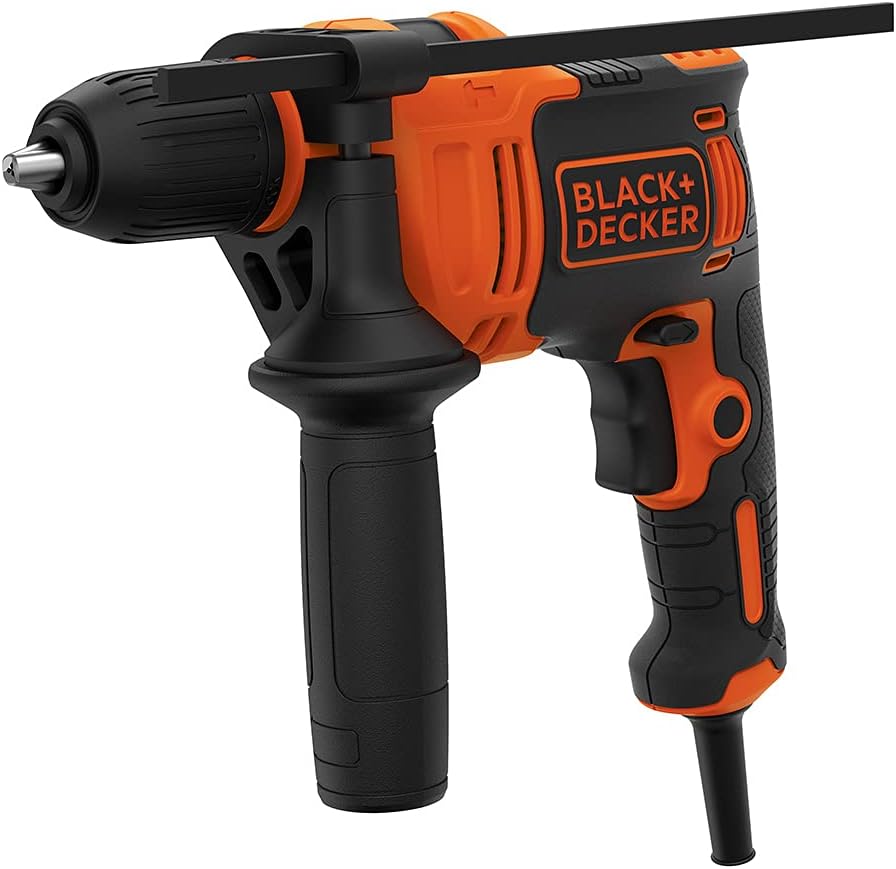
The BLACK+DECKER 6.5-Amp corded hammer drill is a practical choice for homeowners who need hammer-drilling capability without paying for a professional-grade machine. Its corded design provides consistent power, while the variable-speed trigger gives users better control over drilling speed.
With a 6.5-amp motor and a maximum speed of 2,800 RPM, this drill is well suited to occasional masonry projects. The keyless 1/2-inch chuck makes changing bits convenient, although buyers should remember that bits are not included and need to be purchased separately.
The three-position side handle adds control, and its relatively light 4.1-pound weight makes it easier to manage than many heavy-duty alternatives. It is best viewed as an affordable occasional-use hammer drill rather than a tool for continuous professional workloads.
| Pros | Cons |
|---|---|
|
|
3. Makita Cordless 1/2-Inch Hammer Driver-Drill Kit

The Makita cordless 1/2-inch hammer driver-drill is designed for users who want professional-level performance in a cordless package. Its heavy-duty motor delivers impressive drilling capability, while the included side handle helps maintain stability and control when the tool is producing substantial torque.
This drill is particularly capable when working through wood and concrete blocks. It offers two speed settings and both standard drilling and hammer-drilling modes, with the hammer function capable of delivering up to 31,500 blows per minute. The compact form also makes it easier to maneuver in tighter spaces.
The kit includes two 18-volt 5.0Ah batteries, providing plenty of runtime for extended jobs. Rubberized grips help improve handling, while the keyless chuck and LED work light add everyday convenience. Its strong driving performance may be excessive for very small screws, but that aggressive power becomes an advantage for larger fastening and drilling tasks.
| Pros | Cons |
|---|---|
|
|
4. Bosch Bulldog Xtreme SDS-Plus Rotary Hammer Drill

The Bosch Bulldog Xtreme takes a different approach from conventional hammer drills by using an SDS-Plus rotary hammer design. It is a particularly strong choice when concrete and masonry drilling are central to the job, while its three operating modes allow it to handle drilling, hammer drilling, and hammer-only applications.
Despite its rotary hammer capability, the tool weighs about 6.7 pounds, helping make longer drilling sessions and overhead work more manageable. The D-shaped handle and additional forward handle provide useful control, especially when working in awkward positions or applying pressure to hard masonry.
The hammer-only mode offers 36 bit positions, allowing the bit to be adjusted to a suitable angle for chiseling or scoring. Its maximum speed reaches 1,300 RPM and impact rate reaches 5,800 BPM. The SDS-Plus chuck limits it to compatible SDS or SDS-Plus bits, but that specialized system is well suited to serious masonry work.
| Pros | Cons |
|---|---|
|
|
5. DEWALT 20V MAX XR Hammer Drill/Driver

The DEWALT 20V MAX XR hammer drill/driver is a strong option for users who want serious drilling performance without the bulky feel associated with many traditional hammer drills. Its compact dimensions make it especially useful in cramped work areas, while the cordless platform keeps the tool convenient for jobsites and home projects.
Two speed settings and 13 clutch positions provide useful flexibility for different drilling and fastening tasks. When masonry work demands more impact, the hammer function produces up to 34,000 BPM. The compact seven-inch length and approximately 3.5-pound weight with battery also make it comfortable for extended or overhead work.
Another advantage of this kit is that it includes two 2Ah battery packs rather than just one. The batteries are not the largest capacity available, but having two packs helps reduce downtime and can make the kit particularly attractive to users who are building a DEWALT cordless tool collection from scratch.
| Pros | Cons |
|---|---|
|
|
Which Hammer Drill Should You Choose?
For maximum cordless versatility and demanding work, the DEWALT MAX XR 20-Volt is an excellent choice. It offers the power and durability expected from a professional-oriented tool while eliminating the need for a power cord.
If affordability and occasional masonry drilling are the priorities, the BLACK+DECKER 6.5-Amp is a sensible option. Its corded configuration and variable-speed trigger make it straightforward for homeowners who do not need a heavy-duty tool every week.
For users seeking a premium cordless combination of hammer drilling and driving capability, the Makita delivers impressive performance and long battery runtime. Meanwhile, the Bosch Bulldog Xtreme is the specialized pick for serious concrete and masonry drilling, particularly when hammer-only chiseling capability is useful.
Finally, the DEWALT 20V MAX XR stands out for its compact size and high impact rate. It is a particularly attractive option when you need substantial hammer-drilling capability but frequently work in tight spaces or overhead.
Final Verdict
The best hammer drill depends on the type of material you work with and how frequently you need maximum power. For professional-level cordless versatility, DEWALT and Makita provide excellent choices. For occasional home projects, BLACK+DECKER offers a more budget-friendly route. If concrete and masonry are your primary targets, the Bosch Bulldog Xtreme’s SDS-Plus rotary hammer design provides the specialized capability that a conventional hammer drill cannot always match.
Whichever model you choose, consider the right bit type for your material, use the auxiliary handle when supplied, and match the drill’s capabilities to the demands of your project.
Related Posts

The 5 Best Bath Mats That Are Chic, Comfortable & Stylish
A great bath mat should do more than protect your…

The 5 Best USB Hubs for Expanding Your Laptop’s Connectivity
Modern laptops and tablets are getting thinner, but that often…

The 5 Best Running Shoes for Comfort, Speed, and Everyday Miles
Finding the right running shoe can make everyday miles feel…