
Looking for the best portable fire pit for camping, tailgating, RV trips, backyard gatherings, or outdoor cooking? We reviewed five popular portable fire pits with different designs, fuel types, portability features, and fire-management systems. From compact wood-burning models to propane-powered options and smokeless fire pits, these picks cover a wide range of outdoor needs.
The right portable fire pit depends on how you plan to use it. Some models prioritize compact storage and easy transportation, while others provide a larger cooking surface, stronger airflow, easier cleanup, or smoke reduction. Below, you’ll find a quick comparison followed by detailed reviews of all five products.
Best Portable Fire Pits at a Glance
How We Compared These Portable Fire Pits
When comparing portable fire pits, portability is only one part of the equation. We considered how easily each design can be transported and stored, how stable it feels during use, how effectively it manages airflow, and how practical it is for outdoor cooking or relaxing around a fire.
We also looked at cleanup and fuel requirements. Wood-burning fire pits can create a traditional campfire atmosphere, while propane models can offer smoke-free operation and easier cleanup. Smokeless designs use airflow and secondary combustion to reduce visible smoke, but they can also burn wood more quickly.
The five models below have noticeably different strengths, so the best choice for you will depend on your camping style, available storage space, preferred fuel, cooking needs, and how often you expect to move the fire pit.
1. UCO Flatpack Portable Fire Pit

The UCO Flatpack Portable Fire Pit is designed for campers who want a full fire pit without carrying a bulky, permanent-style unit. When folded down, its slim profile makes it surprisingly easy to pack and transport, and the included canvas case adds another layer of convenience for storage and carrying.
With dimensions of approximately 7.5 x 16 x 7.48 inches and a weight of about 3.2 pounds, the Flatpack is one of the more compact options in this group. It burns wood or charcoal and includes a grill grate, giving campers the ability to cook foods such as hot dogs and burgers at a campsite or outdoor gathering.
The compact construction does not mean it feels flimsy. During testing, the Flatpack was described as sturdy and stable despite being the smallest of the full fire pits tested. The grill grate is also dishwasher-safe, which can make post-cooking cleanup easier. One consideration is smoke: despite the relatively small flame, the elevated fire can still produce a noticeable amount of smoke when exposed to wind.
| Feature | Details |
|---|---|
| Dimensions | 7.5 x 16 x 7.48 inches |
| Weight | 3.2 lb |
| Fuel | Wood, charcoal |
| Cooking | Includes grill grate |
| Pros | Cons |
|---|---|
|
|
2. Fireside Outdoor Pop-Up Portable Fire Pit

The Fireside Outdoor Pop-Up Portable Fire Pit takes portability in a different direction. When packed, it is roughly comparable in size to a folded camp chair, but once opened it provides a much larger platform for building a substantial outdoor fire.
Its 4-square-foot stainless-steel mesh surface provides plenty of room for logs, while the 3.5-inch-high walls help protect the fire from wind without completely blocking the heat. The mesh construction also promotes airflow, which can help reduce smoke. Because the top remains completely open, adding logs and tending the fire is straightforward once everything is assembled.
Setup is the main consideration. The legs are easy to unfold, but the heat shield, individual walls, and mesh surface require several assembly steps. That means there are more components to keep track of compared with simpler portable fire pits. For campers who want a broad fire area and the option of adding a tri-fold cooking grate, however, the Pop-Up offers a versatile outdoor setup.
| Feature | Details |
|---|---|
| Fire Surface | 4 square feet |
| Surface | Stainless-steel mesh |
| Log Capacity | Up to 125 lb according to Fireside Outdoor |
| Wall Height | 3.5 inches |
| Pros | Cons |
|---|---|
|
|
3. Outland Living Propane Portable Fire Pit

The Outland Living Propane Portable Fire Pit is an alternative to traditional wood-burning fire pits. Instead of carrying firewood and dealing with ash, this model uses propane, making it particularly interesting for campers and travelers who prefer a cleaner and more controlled outdoor fire experience.
One of its biggest advantages is operation during burn bans where propane fire pits are permitted under local rules. It produces no wood smoke and creates virtually no ash or traditional campfire mess. That can make it useful for RVing, overlanding, tailgating, and other situations where minimizing cleanup is important.
The trade-off is fuel logistics. A filled propane tank can add significant weight, with a full tank weighing roughly 37 pounds, although the tank can provide a long operating time. For people who frequently travel by vehicle and value smoke-free operation and easy cleanup, the propane format can be especially practical. Always check local fire regulations before using any fire pit.
| Feature | Details |
|---|---|
| Fuel | Propane |
| Operation | Smoke-free propane fire |
| Cleanup | Virtually no ash from wood burning |
| Best suited for | RVing, overlanding and vehicle-based camping |
| Pros | Cons |
|---|---|
|
|
4. Solo Stove Bonfire 2.0 Portable Fire Pit

The Solo Stove Bonfire 2.0 builds on the company’s smokeless fire pit design while adding a removable ash pan to simplify cleanup. The stainless-steel cylindrical construction is designed around airflow, with openings at the bottom and near the top that help draw oxygen into the fire and support secondary combustion.
The included carrying case is another useful feature for portability. Its bag-style design with handles makes transporting the fire pit easier and helps contain loose ash during transportation and storage. The smokeless design can significantly reduce visible smoke compared with a conventional open fire, which is useful when sitting close to the flames.
The airflow system also means the Bonfire can burn hot and quickly. Logs may be consumed faster than they would be in a traditional open fire, but that rapid burn can leave very little ash behind. The removable ash pan is a welcome improvement, although users still need to wait until the fire pit is completely cool before removing the internal grate and emptying the pan. Gloves are recommended during cleanup because ash and soot can make the process messy.
| Feature | Details |
|---|---|
| Fuel | Wood |
| Construction | Double-walled stainless steel |
| Smoke Control | Secondary-combustion airflow system |
| Cleanup | Removable ash pan |
| Pros | Cons |
|---|---|
|
|
5. Primus Kamoto OpenFire Large Portable Fire Pit
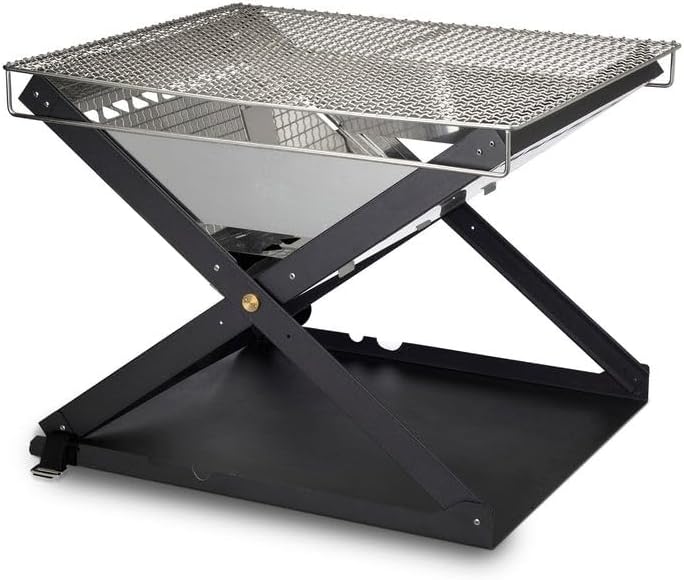
The Primus Kamoto OpenFire Large Portable Fire Pit uses a clever folding design that makes setup relatively straightforward. The ends lift into a stable X-shaped structure, the legs fit into their grooves, and the fire pit drops into place before you start the fire.
The included wind shields help protect the flame from gusts while allowing heat to reach the surrounding area. The large ash tray is another practical feature because it gives users a dedicated place for collecting ash and can make cleanup easier after the fire has cooled completely.
Cooking is one of the Kamoto’s notable advantages. The included grate provides ample grill space, making the fire pit useful for outdoor meals as well as simply gathering around a fire. However, care is needed during setup because the edges can be sharp. It should also be positioned on flat, stable ground free of debris to reduce wobbling and help prevent sparks from being kicked up.
| Feature | Details |
|---|---|
| Design | Folding portable fire pit |
| Wind Protection | Included wind shields |
| Cooking | Included grill grate |
| Cleanup | Large ash tray |
| Pros | Cons |
|---|---|
|
|
Which Portable Fire Pit Style Fits Your Needs?
For maximum packability, the UCO Flatpack focuses on a slim folded design and low weight. The Fireside Outdoor Pop-Up offers a much larger fire surface while still folding down for transportation. If you prefer to avoid wood smoke and ash, the propane-powered Outland Living model provides a different approach.
For people interested in reduced visible smoke from a wood fire, the Solo Stove Bonfire 2.0 uses a double-wall airflow system and secondary combustion. Meanwhile, the Primus Kamoto OpenFire combines portability with a large cooking area, wind shields, and a dedicated ash tray.
Before purchasing any portable fire pit, check the rules at your campsite, park, campground, or local area. Fire restrictions can change based on location and conditions. Always use the fire pit on a suitable, stable surface, keep flammable materials away from the fire, and follow the manufacturer’s safety instructions.
Final Thoughts
These five portable fire pits demonstrate how different outdoor fire-pit designs can be. Compact folding models can be convenient for campers with limited storage, larger mesh designs can provide more room for a substantial fire, propane models can simplify smoke and ash management, and smokeless wood-burning designs can focus on airflow and secondary combustion.
Consider your transportation method, preferred fuel, desired fire size, cooking requirements, cleanup preferences, and local fire regulations before choosing a model. Comparing those factors against the features above can help you select a portable fire pit that fits your outdoor setup.
Related Posts

The Best Skateboards: Top 5 Complete Skateboards for Beginners, Kids & Cruisers
Finding the right skateboard depends on how and where you…

The 5 Best Home Theater Projectors for Stunning Big-Screen Entertainment
Choosing the right home theater projector can transform movies, sports,…

The Best Instant Pots for Cooking Smarter: Top 5 Multi-Cookers Reviewed
Finding the right Instant Pot can make everyday cooking faster,…